Multifora roses are in bloom this week.

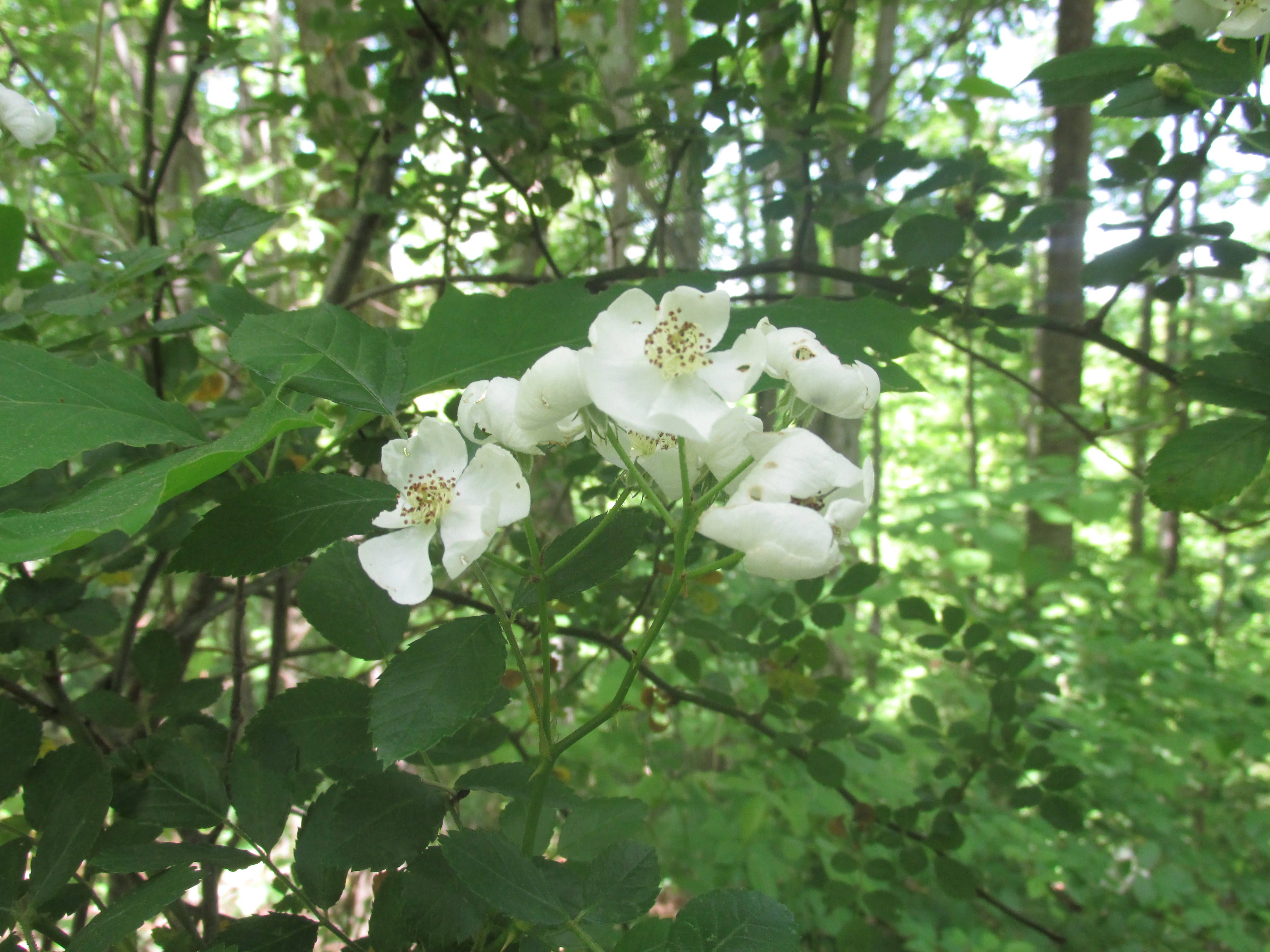

This thorny plant spreads out like concertina wire along old roads and overgrown pastures. It was introduced in the 193o’s in attempt to create a naturally growing fence to contain livestock.
It turned out that the birds in North America that had a penchant for eating its hips were also very good at spreading its seeds, and it wasn’t long before multifora rose were everywhere.




That’s “multiflora”, is it not? Very plentiful here in southern Michigan.
Such a charming noxious weed. Still very popular as a garden plant in areas of the world where it isn’t much of a pest species. It will often grow well where the more inbred weakling teas, English and floribundas etc roses of this world succumb to a host of diseases.
The “concertina razor wire” is prized as security planting around misty elevated homesteads in parts of the African highlands, keeping wild animals but primarily oppertunistic humans out of chicken runs , bedroom windows and storage.
My father I noticed recently is now buried under a mound of it prettily clipped to display the stone to best advantage. He was an avid birder the more so the older he got so it’s rather fitting as the rose was alive with little birds. I expect its a safe place to be.
In the British Isles we have rosa multiflora but the most ubiquitous wild rose by far is the dog rose, rosa canina, which is far prettier coming in many shades of pink tinged yellow and followed in autumn by red hips. My generation of infant school children were tasked with collecting these fruits at the beginning of World War Two to be made into syrup to ameliorate sweetener shortages caused when our islands were surrounded by German submarines.
Similarly, in the US we little schoolchildren were taken out unto the countryside to pick ripe milkweed pods. The fluff from inside the pods was used to stuff flotation devices for sailors. Even an apparently pest may prove to be of use when need arises.
Maybe there is harmony, even, in Nature disturbed. The proliferation of throned plants–not the multiflora rose here in Florida but a similar, less pretty clade–tends to provide cover for ground-nesting birds and other species that are vulnerable to proliferation of feral cats, foxes, raccoons, an other lower level predators. Wish it weren’t so. They sure do make life miserable for taking a walk in the woods. Vine forests, which follow deforestation in many parts of Amazonia, are hell to walk through due to proliferation of spines.
I can empathise on this subject of prickly forest undergrowth. I guess every naturally forested country has its share. I don’t know what is worst of ours in uk: stinging nettles are up there along with blackberry, holly and yes wild roses. Only the ‘cathedral’ forests where the tree canopy excludes much light reaching the floor from late spring onward are easy to walk through without having to hack a way or follow established animal tracks. Well thinned forests invite the development of prickly undergrowth of course. More delicate woodland plants are often affected by an overpopulation of deer in this country. I don’t know what’s to be done about that, if anything.
We have a solution for that.
It works too.
And people pay to do it, which is even better.
Here we are spoiled for choice, but my favourite floral invader is definitely Buddleia Davidii a beautiful bee and butterfly bush from the east which established itself through seeds being blown along Britain’s railway embankments which proved to be exactly right for it..