Golden retrievers can’t do this. And if they can, there’s something wrong.
This dog is a Hovawart.
And the blond ones look like golden retrievers.
They aren’t.
They aren’t even related.
It’s just a coincidence that they look like each other.
August 20, 2010 by retrieverman
Golden retrievers can’t do this. And if they can, there’s something wrong.
This dog is a Hovawart.
And the blond ones look like golden retrievers.
They aren’t.
They aren’t even related.
It’s just a coincidence that they look like each other.


 | BorderWars on I have no words… |
 | massugu on I have no words… |
 | UrbanCollieChick on The lost days of dogs and… |
 | YRYDYCE on The lost days of dogs and… |





I read somewhere that the Hovawart has a little Newfie blood in its gene pool. Wouldn’t that make them related just a little?
Now that you mention it, I believe there is.
And they have Leonberger in them, too, and Leonbergers are derived from Landseer Newfoundlands.
But they also have a lot of German shepherd and Kuvasz in them.
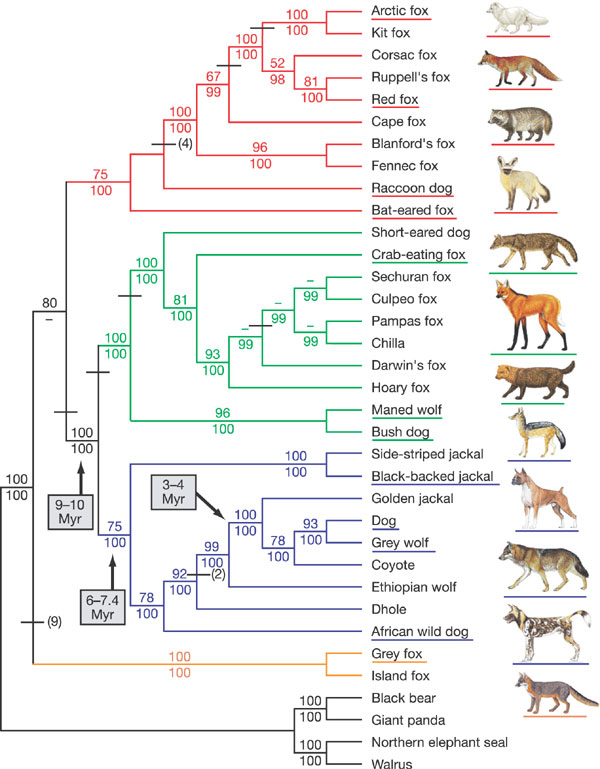
LOL. One souce says that they have African wild dog in them!
That’s unpossible.
It’s amazing how much the blond ones look like goldens and the solid black ones look like flat-coats.
Both of these dogs are very trainable and good family pets.
In the German speaking world, they are very popular.
But if you want a protection dog, get a Hovawart.
Goldens and flat-coats, in general, aren’t much good at it.
Actually, I’ve always wanted a Hovawart. I prefer them to other guard dog breeds because of their approachable demeanor. Most other guard dogs look a little too much like guard dogs.
[…] more: How you know this isn't a golden retriever « Retrieverman's Weblog Tagged and categorized as: Uncategorized , blond, golden-retriever, golden-retrievers, […]
Scottie, when you say a “Golden can’t do this,” what do you mean? Because they lack the necessary level of drive to guard in this manner?
I’m saying that they have very high bite inhibition as a breed.
Normally.
Some people are able to turn Labs into Schutzhund dogs, but I think you’d selecting for hard mouth or at least encouraging it.
I worry about trying to do this with a golden retriever.
They aren’t supposed to be very good at protection.
I don’t think goldens should be doing schutzhund.
Thanks – now I understand!
I know of a fellow in Switzerland who uses a Hovawart as a Search-and-Rescue dog. Excellent size and stamina for use in deep snow and mountain slopes. His dogs at least, are very trainable.
Well see this, an old stiff-legged golden doing IPO.
Videos with labs doing IPO are easier to find because the breed is widely used as police dog.
Yes, labradors do widely work as police dogs but only as special dogs!
They are trained in obedience and in some special area: searching for narcotics, explosives, traces of flammable liquids or scent identification work.
IPO, especially the protection part of the trial is absurd, not breed specific to labradors, or even goldens for that matter!
Traditional working breeds are the breeds one can see competing in IPO trials…
There are labs in the US that do protection work.
I’ve never heard of a golden doing this.
They may be too soft to do it.
Some of the most aggressive dogs I have known were Labradors.
Do you really mean that they actually ‘work’, say like police patrol dogs in the US?
Compete seriously in IPO trials?
Or is it just some peculiar ( and showy…) hobby to some lab owners?
I don’t know of any that do police work in this way, but they do compete in Schutzhund trials here.
Sorry, but I find it absolutely incomprehensible as to why obtain a labrador – known for its “soft mouth” – and compete in IPO/Schutzhund trials where the protection phase requires firm grips & bites!
There are retrievers that have learned to kill things and still have soft mouths.
But I suppose these are exceptions and would mess up the gene pool a bit.
I know that the German HPRs, which kill things and retrieve, often have hard mouths.
Hard mouth is also an eliminating fault in HPR field trials… ;)
I’m sure it is.
But I can tell you that I’ve read accounts of German shorthairs that were first imported here from Germany and Austria.
And they really had a problem with hard mouth.
It’s not just HPR’s that have this problem.
Chesapeake Bay retrievers have had issues with it, too.
Chessies were partly derived from cur stock, and some of them have herding instinct.
Somewhere on this blog I have an account of the earliest imports of the Large Munsterlander dogs that were imported here from Germany. The Germans use these dogs to hunt boar and deer, as well as use them as bird dogs. North Americans, except in that book Big Red by Jim Kjelgaard, never use setter-type dogs to hunt big game.
So it was very strange to the bird hunters who imported them when their dogs took off after some white-tailed deer and tried to catch them.
It’s very interesting to be able to produce a soft-mouthed dog that can also hunt wild boar. It’s a very harsh critique of Coppinger’s motor-pattern dependency theory, which is very commonly held in the US.
But that said, in retrievers, it is believed that once one learns how to bite for real, it will forever be harmouthed.
It’s not always the case.
It may not even be the case.
I mean these dogs are smart enough to know when to use their jaws in the right context.
I’ve never personally seen a Schutzhund trained Labrador to see whether this affects hardmouth or not.
It’s still pretty interesting.
The old retriever saw is to never allow a retriever to learn how to kill or bite for real.
About the earliest imports of German shorthairs and the problem with their hard mouth makes a cynical me to think why ever would a breeder export the best dogs he/she has bred… ;)
– Even today it’s still very much the same case! ;)
It’s actually been repeated every time we’ve imported an HPR.
Anyway, the Kurzhaars that were imported happened to have come while we were occupying Germany.
And the Germans were desperate for money in those days, so they sold us their best dogs.
World War II essentially destroyed Germany. We’re lucky that any of these breeds survived.
One nice thing about hovaworts is that they are longed lived. 14 to 15 years is quite common, and i have seen quite a few 16 ear olds. This beats most other protection dogs, particularity the GSD. They are of course, quite rare in the USA–I would go to the EU to get the best lines.
they are not quite as sharp (meaning edge, not intelligence) as GSDs, at least the real professional K8 sort, but they are a handful–particularly the males.
It is not a dog for amateurs.They really need professional training work, if they have that sort of blood, and it is best to take them through at least the first level of SH. If not properly trained they can be quite dangerous. They are a more powerful dog than the average golden. (They can come bigger than the one you show here too,)
Once the roles have been established properly, they are wonderful pets too. You have to keep the relationship clear, but this is true of all protection digs and working K9 types.
Another nice thing about them, at least the USA, is that they do not look like protection dogs at all, as someone here mentioned, and almost nobody, including great many insurance companies, knows about the breed at all. Obviously, the blond ones can be passed of as some sort of large Golden or golden mix breed.
Sort of like an undercover cop.
K8=K9