Tamarin monkeys have always fascinated me. At the National Zoo, there is a rewilding project for golden lion tamarins. Every summer, some of these monkeys are turned out into a wooded area, which allows them an opportunity to learn how to be wild. The National Zoo has reintroduced some of these monkeys to the coastal rainforests of Brazil. The last time I was at the National Zoo, I saw two male golden lion tamarins fight over the privilege of carrying the family’s twins, which were smaller than chipmunks.
There are several species of lion tamarin, which I will explore in another post.
However, the partnership between emperor and saddleback tamarins is really quite fascinating. It is almost like a reversal of the tragedy of the commons.
Here we have a commons– the nectar in the flowers of these trees.
In order to use the resource properly, the two tamarin species have to treat the nectar as a commons. They cannot be possessive of it, or the trees will be tapped out.
So they must share the resource.
How such a partnership evolved is good question. I do not have the answer.
One wonders if these monkeys have the foresight to understand the consequences of not sharing the flowers.
It is possible that they do.
I am just trying to stay within Morgan’s Canon.
I still don’t have an answer.
***
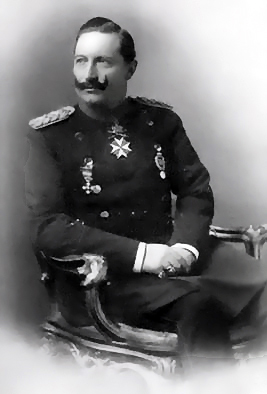
Some of you might be wondering why the emperor tamarins are known by that name.
They are named for their mustaches, which somewhat resemble Kaiser Wilhelm II’s mustache.
Kaiser means emperor. It is derived from Caesar. If one uses the proper Latin pronunciation of Caesar, it actually sounds a lot like Kaiser.
The current convention in historiography is to call tsars/czars and kaisers emperors. The convention also holds that we change the name to its English equivalent.
I still can’t make myself do either.
Emperor William II.
Who in the heck was that?