Mergansers are ducks that live like cormorants. They dive down and hunt fish.
In England, they are called goosanders.
This is the red-breasted species.
Posted in birds, tagged merganser, red-breasted merganser on March 8, 2015 | 1 Comment »
Mergansers are ducks that live like cormorants. They dive down and hunt fish.
In England, they are called goosanders.
This is the red-breasted species.
Posted in golden retriever, Miley, tagged golden retriever on March 8, 2015 |

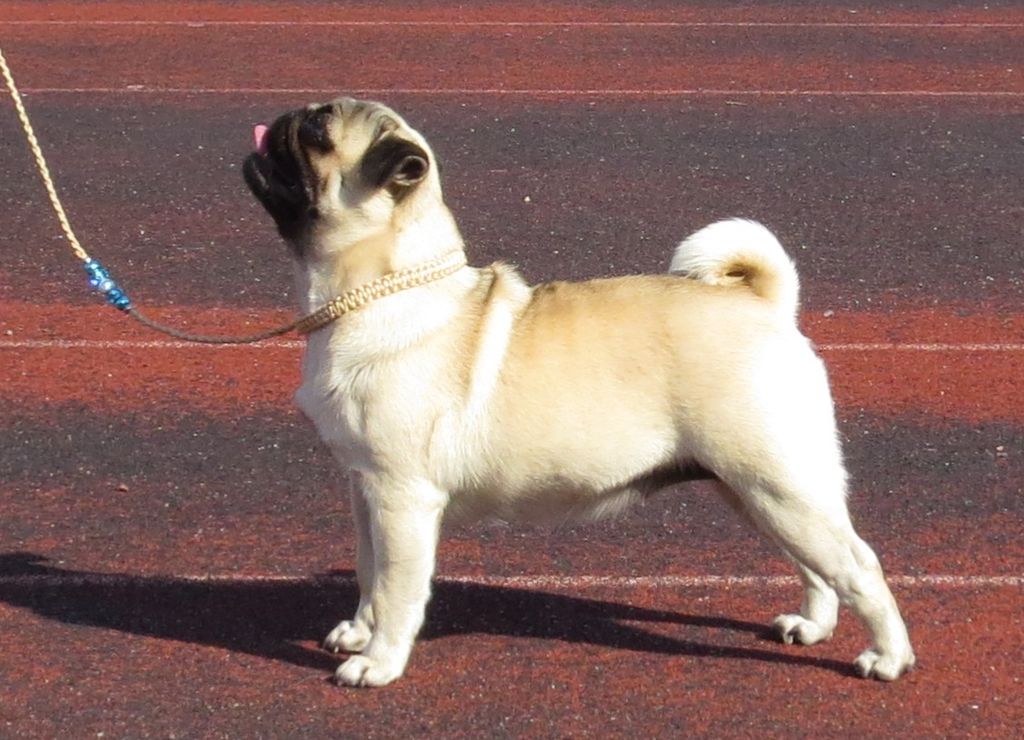
Posted in Absolute Piffle, tagged pug on March 6, 2015 | 3 Comments »
Nothing’s wrong here.
Posted in Absolute Piffle, tagged alien cat, wild cat on March 4, 2015 | 5 Comments »
Posted in housekeeping on March 4, 2015 | 3 Comments »

I have decided to launch a Patreon page for this site. I have been writing this blog for several years now, and I now want to push it to the next level. I have set four goals for this blog over the next few months: buy podcast equipment, buy a telephoto lens for my SLR camera, and buy some better quality trail cameras.
For every monthly pledge of $25.00 or more, I will send you signed copy of the above photograph, which was taken on the coldest day of 2015. Just allow 2-4 weeks for delivery.
If you would like to make a one-time contribution, just use my Paypal account:

Posted in dog breeds, dog health, tagged bulldog, English bulldog on March 2, 2015 | 4 Comments »

I have been writing about the issues around purebred dogs for quite some time now, and one of the breeds that constantly comes us is the English bulldog. I know that this is not the “official name” of this breed, but in common parlance, it is the word used to describe this breed that was largely developed in its current form by English dog dealers. Because dog shows were created by the British, this breed gets called the “bulldog” by default, but in the common parlance, when I say “English bulldog,” people know exactly what I mean.
The bulldog wasn’t always what it is today:
At one time, bulls were baited for sport. Active bulldogs and mastiffs were turned loose on bulls in a way that resembled a sort of Medieval hunt scene against the aurochs. The bulldog’s ancestors were used to hunt the aurochs, and then they were used to control domestic cattle. In those days, cattle had very tough beef from a life wandering the forests and common pastures, and it was believed that if the dogs baited the cattle, it would tenderize the meat. When they let the dogs fight the bulls, it became a spectator sport, and it was not long before there were bull and bear-baiting contests all over England. The dogs became greatly valued as sporting dogs, and their function was greatly esteemed throughout the British Isles. Queen Elizabeth I was a noted lover of baiting both bears and dogs, and her court bred dogs for that purpose.
However, baiting animals began to fall from favor over the next few centuries.
In 1835, parliament passed the Cruelty to Animals Act, and bull and bear baiting were both banned. The bulldogs were without a job, and it wasn’t long before dog dealers got their hands on the animals. The infamous Bill George of Kensal New Town in London bred several lines of toned down bulldog for British consumers. He bred little ones and big ones. He may have crossed the dogs with pugs, but it was pretty clear that pug got into the bulldog at some point.
But without a task for which one could breed a bulldog, British dog dealers and, later, British dog fanciers began to produce bulldogs that were totally unfit for anything. By the 1890s, the top-winning bulldogs were known for lacking soundness. One of them infamously got worn out on a walking race against a more athletic but less fashionable competitor. By 1900, bulldogs were known to be difficult to breed and rear, and for most of their history in the twentieth century, bulldogs were relatively rare.
The dogs became known for having so many genetic and conformation problems that essentially the only disorder they can’t suffer from is a matted coat. They have issues cooling and fully oxygenating themselves. They are known to suffer severe infections from inverted tails. The difficulty in breeding such animals almost sounds as if mother nature doesn’t want them be reproducing. Because the dogs are heavy in the front, they often have issues mounting the bitches. Mating cradles are often needed to hold the dog over the bitch, and many breeders simply do AI to produce their pups. And once conception happens, things get complicated when it comes to whelping. Virtually all bulldogs born in the US are delivered through Cesarean. The pups have such big heads, and there mothers have such narrow pelvises that the pup very often cannot be born naturally.
The average lifespan of a bulldog is just a little over six years, so if you get one of these dogs, your chances of it dying before it hits middle age for most dogs is actually quite high. Many people have purchased bulldogs as companions for their children, but this breed has the potential to cause a lot of heartache for a young child when the animal suddenly dies.
Everything about this dog says that you don’t want it unless you have lots of money and rather weird tastes. The dog’s conformation isn’t just a hindrance to good health. It also a caricature. The dogs have been bred into a kind of canine John Bull figure, and unless someone would rather have the caricature than an actual dog, there really wasn’t a market for them.
But time, as they say, marches on.
In the first decade of this century, I began to see bulldogs on reality television shows. I thought it was a bit strange, but considering that the most prominent bulldog owner was Ozzy Osbourne, I thought that most people would just associate the extreme nature of the breed with the extreme nature of Ozzy. People would want a bulldog in the same way they would want to bite off a bat’s head.
And I was wrong.
I started seeing bulldogs everywhere.
And that trend has only continued into the present day.
Last week, the AKC released its rankings of its top registered breeds of 2014. Labradors were the top breed in registrations, followed by German shepherds and golden retrievers. Labradors have been the top breed for over two decades, and the other two have had a long run of popularity as well. Those three were also the top three registered by the Canadian Kennel Club in 2014.
But what came in fourth in the AKC rankings was a bit of a shocker. Bulldogs were the fourth most-registered breed by the AKC in 2014, and this is something that does require some attention.
And this bulldog attention has coattails. French bulldogs, the bat-eared little cousins of the English breed, have moved into tenth place. French bulldogs were once in the AKC top ten list. In the 1910s, Boston terriers were the AKC’s top breed, and their French cousin enjoyed high popularity just because the two breeds were related. A Boston terrier, in case you didn’t know, is actually a small bulldog that was created when fighting bull terriers from Boston were crossed with toy and French bulldogs from Europe.
French bulldogs have many of the same problems as the English breed, but this really doesn’t matter. This is the decade of the bulldog!
With North America in the throes of bulldog mania, it might be useful to figure out why people are buying bulldogs.
As far as I can tell, there are a few reasons. One of these is that most Americans live in urban centers and have no real connection with other animals. There is no concept of what is “normal” for a dog or any other creature. If a person sees a cute dog on television, then they are instantly going to feel some connection to it. Extreme brachycephalic dogs are quite attractive to people. We forget that as primates we are predisposed to being attracted to things that look like primates. It is easier for us to have comradery with a dog that has a monkey face than it is with a long-muzzled one.
Another reason is that modern Americans work longer hours than every before. The economic recovery after the recession has led to people spending more and more time at the office, and that means people have far less time to exercise dogs.
People are looking for dogs that don’t require much exercise, and if a dog breed has certain deformities that prevent it from running hard and long all day, then it is going to be the perfect dog for the modern world.
This is the real shame of the modern world.
We now live in a society where it is now much more difficult to own more active and more soundly constructed dogs, so we are turning to dogs that were largely cast aside because of their unsoundness.
It will take a long time for bulldogs to replace Labradors as the top breed. Indeed, I don’t see it happening any time soon. However, it is possible that they could make it into the top 3 breeds very soon. The AKC doesn’t release numbers of the dogs it registers. One reason it doesn’t is that most American dogs are not AKC-registered and that number has dropped over the past two decades. We really don’t know the relative popularity of particular dog breeds in the population at large, but the AKC registrations do suggest that bulldogs are rising in popularity.
The number of people who are willing to spend so much money for a dog must be much higher than I would have assumed. Bulldogs are not cheap.
And their vet bills aren’t cheap either.
But the allure of having a dog that looks like cartoon character, loves kids, and doesn’t have much of a need for exercise must be stronger than any of the money sense that goes into considering bringing a dog into a home.
Of course, my guess is there isn’t that much consideration going on at all.
The urban jungle and popular culture are working against good sense in choosing a dog, and if the future of dogs in this country is the bulldog, then we’ve totally lost whatever it means to appreciate Canis lupus familiaris. Just as the Chinese bred the peke with bent legs so it wouldn’t run off, the bulldog’s utter lack of physical soundness is now an asset in the modern world.
That’s just not a good future for dogs.
If the only way they can live with us is to be like bulldogs, then this is indeed a very dark development.
We have become so alienated from nature that we have forgotten what dogs are, and if we have lost sight of what dogs are about, then there isn’t much hope for the rest of the creatures on this planet.
We’re losing the plot.
We’re losing them, just as we’re losing ourselves.
And we may never regain any of it.
This is the real story behind the bulldog’s rise, and no cute little press releases about the AKC’s top are going to change anything about this dire situation.
Only connecting the modern world with real dogs in a truly meaningful way will ever stem the dismal tide, and such a task may be all but impossible.
If we lose real dogs, then we truly will be alone on this planet. Even though we evolved from earlier earthlings, we will become aliens here.
Our only companions will be these deformed dogs, who might as well be aliens to the rest of their kind as well.
Information-filled but largely ignorant humanity will reign will reign with debased canids licking our fingers.
This should not be where dogs and people wind up, but unfortunately, it may be where the final story of our kind ends up.
And it may not be stopped.
This is the true tragedy of our kind and theirs.
Posted in dog domestication, wolves, tagged dog domestication, European wolf, Finnish wolves, golden wolf, yellow wolf on March 2, 2015 | 2 Comments »
Wolves come in many colors. The black ones, as we know, have their origin in domestic dogs, which crossed with wild wolves. The revelation intrigued me when it came out in early 2009, and I am always thinking of what color might mean when it comes to the evolution of wolves and dogs.
I have noticed that there are many photos of wolves from Finland that have an unusual color. Most European wolves (Canis lupus lupus) are dark gray sable, the classic “wolf color,” but in Finland, there seem to be more than a few wolves that appear to be golden in color. The wolves have varying amounts of sabling on their pelts, and some are what we would call “clear sables” if they were domestic dogs, as we can see the photos of “Susi,” the famous Swedish wolf that came from Finland or Russia.
It is possible that this coloration also has its origin in domestic dogs. There are rumors that the Russians turned out wolfdogs on the Finnish border, but there are always rumors about Russians and their deeds.
Of course, the Finns have always owned dogs of this color, and it is now known that some of these hunting and herding spitz breeds are derived from wolf and dog crosses. It is possible that the gene flow has worked both ways between these spitzes and Finnish wolves. Indeed, it is probably quite likely.
However, there is another possibility that is also worth considering. In late 2013, Olaf Thalmann and Robert Wayne published a paper that compared samples of ancient mitochondrial DNA from the remains wolves, dogs, and possible transitional forms between wolves and dogs from Europe were compared to modern dogs and wolves. In this analysis, samples from dingoes and basenjis were included in order to get samples from dog populations that had long been isolated from the main dog population. All modern dogs, including dingoes, are very close to these ancient European wolves in terms of their mitochondrial ancestry. Mitochondrial DNA alone can lead people astray when tracing evolution and ancestry, but the fact that dingoes were closest to these European canids really does point to a strong possibility that dogs were domesticated by European hunter-gatherers at some point between 18,800–32,100 years ago.
It is also interesting to me that almost all dingoes and many, many pariah and primitive dogs are red or yellow sables like these wolves. I wonder if these yellow Finnish wolves represent a sort of throwback to the ancestral European wolf population that gave rise to domestic dogs. Perhaps the majority of the ancient European wolves were golden in color.
Yellow wolves do occur in the Middle East, China, and South Asia, and China and the Middle East have been suggested to be places where dog domestication first happened. However, none of these wolves have been linked to dogs through ancient DNA samples in the same way the ancient wolves of Europe have been.
Of course, the questions about the yellow wolves of Finland could be answered in much the same way the questions about the origins of the black wolves of North America were.
But there is something to these golden wolves that does need some exploration.
Maybe they are the result of dog and wolf gene flow. Maybe they are just a local unique mutation.
Or maybe they are a flash of gold that tells us a bit about the past.
DNA nalysis on ancient remains has already revealed that dappled and black horses were in the wild Pleistocene horse populations, but no similar studies have been performed on the remains of ancient wolves or dogs.
Maybe there really is something to these yellow Finnish wolves that just a pretty coat.


 | williewestfall on Bobcat scat |
 | cyborgsuzy on Forgive the gratuitous ne… |
 | retrieverman on Forgive the gratuitous ne… |
 | pondpawed on Forgive the gratuitous ne… |
 | Eugenie on Tailgate |


