Feeds:

Archive for February, 2011

The 1st Foundational Falsehood of Creationism

Source.

Read Full Post »

The St. John’s water dog as a cur

You could be forgiven for thinking that these puppies were yellow Labradors or Labrador crosses.

They are blackmouth curs, just without the classic black mask.

Here an adult maskless blackmouth cur. It very strongly resembles a yellow Labrador:

(Source for image.)

The typical coloration for this type of cur isn’t pure yellow. Normally, it is a sable or clear yellow dog with a black mask.

(Source for image)

However, they also come in brindle with a black mask and solid black. A solid black one would be very hard to distinguish from a Labrador or Labrador mix.

There are several different strains of blackmouth cur, but I am not going into it for the purposes of this piece. They vary greatly in appearance and size, with the smallest individuals weighing about 30 pounds and the largest approaching a hundred pounds.

There are several different strains of cur that are native to the US, all of which are in various stages of standardizing into definite breeds. The blackmouth variety is native to the Gulf Coast states from Florida to Texas.  These are true landrace dogs, which descended from English curs dogs, various shepherds and mastiffs, and perhaps the dogs of the Native Americans.

It is very hard to classify the cur. They can be used as stock dogs,  feral hog dogs, coonhounds, squirrel dogs, and just about anything else one can image. I believe some of these dogs have retrieving instinct and could easily be turned into decent bird dogs.

(Source for image)

Curs are not mongrels, but they weren’t exactly breeds as we know them until recently. Different strains and types interbred, and different families established their own strains. Curs were the dogs of the common people, and these dogs were generally not considered for registration into the large kennel clubs. The term “cur” came to reflect a dog that was owned by the blue-collar set, and it got mixed up with the term mongrel.

These dog are generally very biddable and eager to please, although each dog is an individual and certain strains may have not been selected for trainability. And they are generally good with children.

Curs were the dogs of English settlers to the North America. These dogs were particularly common in the North of England and the West Country, which is also where many English settlers to the South came from.  The West Country is also the place where many Newfoundlanders of English descent settled.

It seems likely that one of the dogs that the English in Newfoundland would have brought would have been working cur dogs. These dogs likely were ubiquitous across the English colonies in North America.

In Newfoundland, the dogs crossed with various other strains that managed to make it in Newfoundland, including water dogs from Iberia. The dogs were put to work setting nets and hauling lines.

If the yellow coloration were endemic to English curs, then this breed is a likely source for the yellow color in retrievers. The yellow or red coloration occasionally popped up in various dogs with origins on Newfoundland.

Because of the addition of other breeds and because working in the water off the coast of Newfoundland requires a different coat from dogs working on farms in the subtropical South, the St. John’s water dog evolved a much thicker undercoat.

The dog below is Nell, a St. John’s water dog who was born in 1856 in Scotland. Her ancestry was solely from Newfoundland.

And she does bear a resemblance to the blackmouth cur dog, just she is predominantly black in color.

Therefore, it may be more instructive to think of the St. John’s water dog as the endemic cur of Newfoundland that unfortunately went extinct. However, this cur breed went on to found all the extant retriever breeds.

Mark Derr was the first person to postulate this classification for the St. John’s water dog. He suggested this classification in Dog’s Best Friend, and even though I read that book years ago, it has taken me years to finally accept the merits of classifying this extinct breed as a cur.

In the end, I resisted this classification because of my own biases. Subconsciously, I was harboring a bias against dogs that were native to my own country but were not being maintained in an actual registry. But once I’ve pruned away these biases, I think this classification works.

So the St. John’s water dog and the ancestral Newfoundland were the curs of their island homeland.

 

Read Full Post »

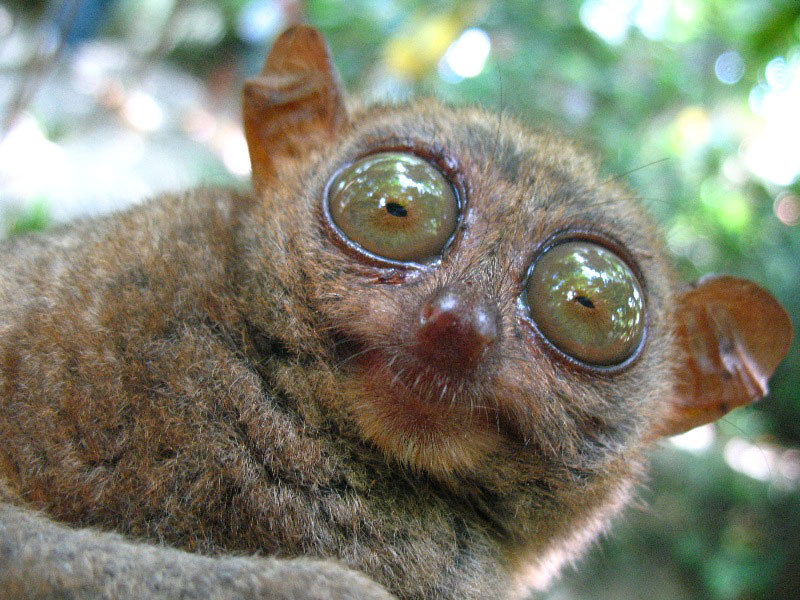
Tarsier dog

This dog looks so much like a tarsier.

A tarsiers are haplorrhine primates but are not Old World or New World monkeys.

This is a Philippine tarsier:

See the resemblance?

Read Full Post »

Dual Ch-AFC Craigmar Dustrack

A litter this dog sired with Ch. Pele of Flarewin appears in Gertrude Fischer’s The New Complete Golden Retriever.

If both Pele and Dustrack were alive today, they would be called “field-line.”

However, both clearly were within the standard.

Note the correct wavy coat on Dustrack. Such a coat is very useful in cutting through water and keeping the dog from becoming saturated.

Read Full Post »

Modern Sussex spaniel

The dog is a museum piece, though it might be a good family dog.

Read Full Post »

Some actual Rosehill Sussex

These dogs both appear in works by Stonehenge (John Henry Walsh). They lived in the middle of the nineteenth century:

The dog above is George.  George was of Rosehill breeding, and although a short-legged dog, he is not extremely so. Many spaniels of the time had relatively short legs, but it was never as extreme as the old show-type field spaniel or the extreme type that eventually became the modern Sussex spaniel.

Here’s another depiction of George in a Stonehenge work.  He is accompanied by another dog named Romp.  George is the background; Romp is in the foreground.  Neither is as exaggerated as a modern Sussex.

These dogs have short legs, but they are not extreme.  The difference between these dogs and the modern Sussex is the difference between any working breed of basset in France and the show basset hound that was developed in England.

Have a look at this fawn basset of Brittany. It has relatively longer legs than the show basset we know in the English speaking world and is still widely used for hunting in France and in other
European countries.

Most rabbit hunters in the US don’t use bassets, and if they do, they use the French breeds, crosses between the English breed and the French breeds, basset/beagle crosses, or very rare field line bassets, which often have a few harrier ancestors. They don’t normally use the show dogs. They are just that inefficiently built.  English bassets have been bred for show and pet for many generations, and very little consideration has been given to their working ability. (See this video to get an idea what happened to the English basset.)

The same thing happened to the Rosehill Sussex spaniel. Breeding for extreme short legs became a major fad in the show ring, which later became part and parcel of the breed standard. Fuller wanted a short-legged dog that gave tongue when on the hunt, but he didn’t want something that was so short-legged it was nonfunctional.

And that’s exactly what happened to Sussex spaniels by the end of the nineteenth century. By the end of the nineteenth century and the start of the twentieth, the dogs of the Rosehill type began to look like this:

This dog is Ch. Bridford Giddie. He was bred by Moses Woolland, who did use his dogs in shooting, but it doesn’t seem to me that any consideration was given to this dog’s working conformation. If he had any competence in the field, it was in spite of his conformation, not because of it.  This is precisely the conformation that leads to slipped and herniated discs, which is not a trivial matter at all. My father had a hunting dachshund when he was growing up. The dog was very good at hunting all sorts of things, but he was always having slipped discs and had to be confined for long periods of time.

From that conformation distortion, the Sussex has never recovered. The field spaniel, which used to have even shorter legs, has corrected this flaw. It could potentially recover, for it does have many traits that might make it a good working gun dog. I don’t see the same future for the Sussex, which never was all that popular.

I find it interesting that some people use Sussex spaniels to hunt birds. I also find it interesting that Cavaliers can be used to do the same.  It doesn’t mean that either are the first choices for working spaniels or that others might be better choices.

In the real world, breeds succeed or fail on two metrics. One is they can be perfectly conformed for their task in terms of both body and behavior. So long as their utility still exists, the dogs will exist. The other way a breed can succeed is to become popular in the pet market, which is not always a positive development. The pet market is quite fickle and so many different breeds have risen and fallen according to its undulations. Often, what becomes popular in a pet becomes detrimental to the dog’s original function. For example, the really long hair on an American cocker spaniel that so many people love must be chopped off if the dog is ever to be used as a flushing spaniel. And that’s why the working American cocker is about as rare as Sussex spaniel.

The Sussex spaniel failed on both metrics. Very few people want to use them for work. I have never heard of a blue-collar grouse hunter going out of his way to get a Sussex over a working English springer or working cocker.   Although Sussex are nicely natured dogs, it is unlikely that this breed will ever become popular as family pet.  It just isn’t cute enough. People like bassets and spaniels, but the combo is a little off-putting.

Fuller’s experiment may have worked for a time, but the show ring distorted his creation. Its breeders lost site of what this breed should be, and time went on, the forces of creative destruction nearly swept the breed away. It exists now a relic, a museum piece that we certainly should examine for what it tells about what can happen to virtually any breed.

Breeds have to adapt to changing conditions. They cannot remain stuck in time. Conformation has to be based upon a reality that can be empirically verified.

And when breeders allow their breeds to wind up in these positions, extinction isn’t a far off possibility. At some point, there won’t be enough genetic diversity in the breed to sustain itself, or the number of people actually breeding these dogs will be so low that it will be impossible to keep things going.

It’s happened before.

It will happen again, and if I were a betting man, that would be my wager on the Sussex spaniel’s future.

Read Full Post »

Want a pet Canada lynx?

I don’t think so:

Source.

Read Full Post »

« Newer Posts - Older Posts »

Follow

