Feeds:

Archive for June, 2012

Women like retrievermen

A survey of users of Kloof, an iPhone app that I’ve never heard of because I don’t own an iPhone, to see what owning a particular dog breed says about a person one intends to ask for a date.

The results say the following breeds are the top picks for a woman wanting to attract a man:

1. Golden retrievers

2. Labrador retrievers

3. Chihuahuas

4.  Poodles

5. Beagles

However, the survey found that men view women with chihuahuas and poodles as “high maintenance.”

The top five breeds for men wanting to attract women are

1. German shepherds

2. Golden retrievers

3. Labrador retrievers

4. Siberian huskies

5. French bulldogs

The list for breeds that attract women appears to be a bit more “wolfabooish” than the one that women would use to attract men.  Siberian huskies and GSD’s are look a bit like wolves.  Women seem to prefer men who keep less exaggerated breeds. Only the French bulldog on this list is removed from its more natural form.

Women don’t tend to care for men who keep bulldog, pit bulls, or Rottweilers.

[W]omen view men with these breeds as less than brilliant. In fact, people see men owning a Golden Retriever as 10 times more likely to be “marriage material” than one owning a Pit Bull. Pit Bull owners are also 10 times more likely to be considered “slimy” or “sketchy” than someone who owns a Siberian Husky.

These biases may not be particularly fair, but they are there.

And one should keep in mind that I’m obviously the statistical outlier here.

So take this survey with a grain of salt.

Read Full Post »

Yorkshire terriers finally allowed to participate in AKC earthdog tests

On August 1, 2012, Yorkshire terriers are going to be allowed to participate in AKC earthdog events.

This is pretty good news, for Yorkshire terriers, although classified as toy dogs, do derive from small terriers that were used to control rats in coal mines and cotton mills.

There is a well-known terrier blogger who hates Yorkshire terriers and anything that’s not a JRTCA Jack Russell. However, he also regularly bitches about terriers becoming too large.

Well, here’s a solution:  Suck it up. Be a man. Get a Yorkie. You won’t become instantly homosexual when you own a toy dog. I know. Big news, eh?

But they’ll never be too large! And if you’ve spent any time around Yorkies, they are really nothing more than fuzzy little Jack Russells– and they are closely related to them.

If we wanted to breed a smaller Jack Russell, the Yorkshire terrier would be a good choice for an outcross, as would the toy fox terrier and the toy Manchester.

But no, it’s easier to complain that Jack Russells are getting too big than to consider possible alternatives that could be used to solve this problem.

***

Here’s a video from a person who was leading the campaign to get Yorkies recognized as terriers:

Source.

My grandpa used to hunt squirrels and grouse with a chihuahua.

She was as good as any feist or elkhound on squirrels, and with grouse, she was a bit better.

The grouse thought she was a fox, not a dog, and they just lit in the nearest tree when she flushed them.

Which made them easier to shoot.

Just because a dog doesn’t fit your prejudices doesn’t mean that it is useless.

That’s a lesson that too many “serious dog people” ought to learn.

Read Full Post »

Are Eastern coyotes to blame for the increase in Lyme disease?

This past week there was a much talked about study that claimed that the reason why Lyme disease was on the increase is because Eastern coyotes are now killing all the red foxes.

Red foxes are a major predator of the main host for the Lyme disease- carrying tick, the white-footed and deer mice (Peromyscus).

Coyotes do kill red foxes whenever they encounter them, but to blame coyotes for the decrease in red fox numbers is a bit simplistic.

The study examined the number of red foxes, deer, and coyotes in the states of Wisconsin, Minnesota, Virginia, and Pennyslvania over a 30-year period. It found a correlation between the drop in red fox numbers and an increase in Lyme disease. Red fox numbers in all 4 states have dropped over this time period.

Of course, the first rule is that correlation does not imply causation.

There are lots of reasons why Lyme disease could be on the increase. I noticed that they didn’t try to examine the numbers of Peromyscus mice in the study– but it’s one that certainly key to understanding why Lyme disease might become more prevalent.

The study seems to be implying that the number of these mice is on the increase, yet it didn’t even look at them.

Of course, there are reasons why they might be in on the increase– and fox predation isn’t necessarily one of them. This entire region is experiencing longer breeding seasons for mice, which means they can have more litters during their lifetimes.  That wold mean that there could potentially be more Peromyscus running about in a given region now than in the past.

Further, milder winters are good for ticks.  More ticks can overwinter in egg, larval, and adult forms during mild winters than really  harsh ones. The winters in this entire region have been generally milder than they were in the past, which would tend to suggest that we should see an increase in Lyme disease.

I think that this factor is the more likely cause of the increase than a drop in red fox numbers.

However, even the assumption that coyotes are to blame for the drop in red fox numbers needs to be scrutinized.  Although Minnesota and Wisconsin have expansive farmland, Virginia and Pennsylvania have seen a decrease in farmland and increase in forest over this same time period. Dense forests are quite good for gray foxes (Urocyon), and although they are a bit smaller than red foxes on average, they are quite aggressive toward reds and drive them out of their territories. Grays prefer to have access to forests, for unlike the red fox, they readily take to the trees to escape predators.

Competition from gray foxes that are thriving as return of forested habitats seems to me a more likely reason for the red fox’s decline than coyote predation.

Red foxes have a distinct musky odor, and it takes quite a bit of training to get hounds to choose to hunt them over deer, and it seems very unlikely to me that coyotes would choose to hunt red foxes over other prey. They might kill them if they can catch them, but in general, they aren’t going to waste precious energy trying to kill red foxes when there are deer fawns lying around.

So although red fox numbers are on the decrease, it doesn’t make sense that the coyotes are entirely to blame for the decline.

I think the gray fox is a much more likely culprit, and its increase has happened only because forested habitat is expanding in much of East. If the land had remained largely agricultural, it is unlikely that gray foxes would be expanding their range, as they clearly are now.  The warming climate also has some effect here, for gray foxes are not as adapted to living in very cold climates as red foxes are.

But if gray fox numbers are on the increase, this really hurts the hypothesis that fox predation on Peromyscus mice is the main factor controlling Lyme disease. Gray foxes hunt mice just as readily as red ones do. The two animals are competitors for the same niche, and the gray has certain advantages over the red in forested habitats.  A gray fox is not limited to hunting prey on the ground. It can take to the trees to raid bird nests, and it is slightly more omnivorous than the red. If the two foxes have to compete in this environment, the gray can utilize more of the territory and thrive on a smaller acreage than a red fox.

Never mind that gray foxes will attack any red fox they encounter. They can also outcompete them for the same ecological niche.

So if the red foxes are in lower numbers than they were in the past, the mice are still being eaten by foxes. They are just being eaten by gray ones this time.

Further, coyotes are adept mousers. Before they came into the East and started hunting deer, they lived largely on rodents in the West. The idea that they are somehow less efficient predators of mice than red foxes are is pretty hard to justify. If anything, they likely eat more mice in a year than any red fox. Even if they do hunt deer and other larger animals, they still eat mice in order to augment their diet, especially if they aren’t pack-hunting coyotes.

And then there is the whole feral and free-roaming domestic cat factor.

Cats eat mice.

Everyone knows this, and cat numbers in the United States have never been higher.

Cats are likely killing scores more Peromyscus mice than ever before, and they could play a role in transmitting the deer ticks to humans.

Cats like to bring home their kills of white-footed and deer mice, and those little carcasses carry deer ticks, which then come off and attach themselves to the cats’ owners.

The authors of this study have not made a convincing case that coyotes are to blame for the rise in Lyme disease.

A much more likely culprit is the warming climate and the resultant mild winters.

Further, the authors haven’t shown that coyotes are the main reason why red fox numbers are down, when it is likely that a lot of more complex issues are at work here, including climate change, reafforestation, and the rise of the gray fox.

The idea that coyotes are to blame for this problem is quite reductionist.

Reductionist explanations, however, are exactly what lazy science journalism likes to use for headlines.

We should always be skeptical of such simplistic answers to what are more likely to be quite complex ecological issues.

Yes, coyotes do kill and compete with red foxes, but are they alone to blame for the decrease in red foxes and the rise of Lyme disease?

I really don’t think anyone can make that case.

Read Full Post »

Labrador pictus

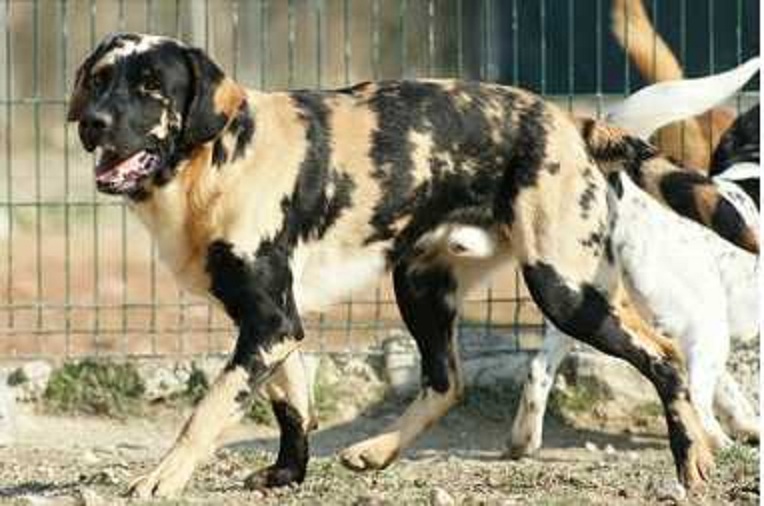
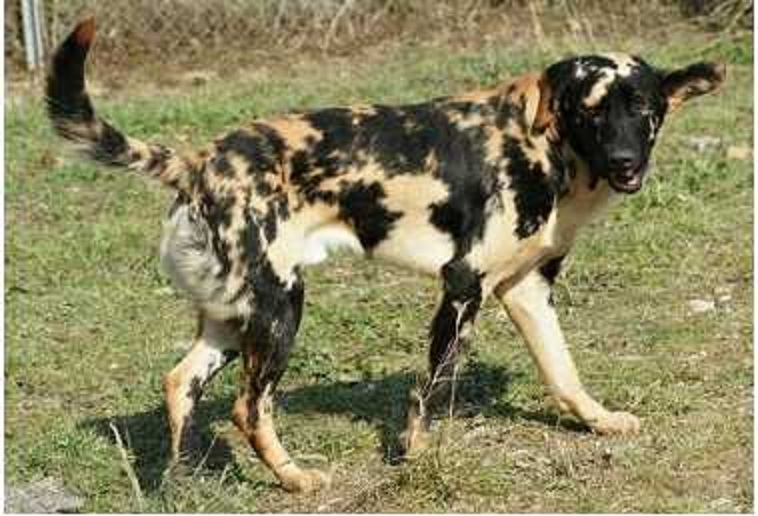
This is a Labrador retriever from France with what appears to have the somatic black spot mutation that appears in golden and Labrador retrievrs on occasion. It is not inherited, but the cells where the black spots are located do not have the e/e mutation that causes the yellow to red coat. Instead, this somatic muation makes the cells E/e, which gets expressed as black or liver. These dogs are sometimes called mosaics.

Alternatively, this dog may not be experiencing that somatic mutation. It might actually be a chimera, which happens when two zygotes combine. This dog could be made up of two distinct fertilized eggs– one that would become a black dog and one that would become yellow.

However, it’s much more likely that it is the result of the somatic muations. Chimeras of this type have not been found in domestic dogs.

***

This dog looks very much like an African wild dog, which is called Lycaon pictus (but should be called Canis pictus).  The title of this post comes from the African wild dog, for the coloration is so similar that one might be fooled into thinking that this is actually a Labrador retriever/African wild dog cross.

Though the pelage coloration is similar, it is caused by an entirely different genetic basis. African wild dogs inherit their “painted” coloration. If this Labrador were bred to another yellow Labrador, all of his offspring would be likely be yellow. The chances of him producing a puppy that will experience this mutation in the somatic cells are very low, and he would not be responsible for it if one did pop up. Somatic cells are not used in reproduction. Gametes are. This Labrador’s gametes are those of a normal black-skinned yellow Labrador.

See related post:

Read Full Post »

De-hayed

The hay that was cut last week has since been baled and hauled off.

This is what remains:

It’s also rained since the hay has been removed, so it’s actually a bit greener than it might have been.

The crows and other scavengers have been eating well. The mowing and baling process cuts up any number of small animals, which are now just lying there in the open for the scavengers to eat.

Read Full Post »

A path in the green woods

A little path through a bit of paradise.

My favorite color is green.

More specifically, this forest color of green.

And this time of year, in the long days of June, green dominates everything.

Read Full Post »

New research on the genetics of ancient dog-like canids

The skull of a “dog” from Goyet Cave in Belgium, This skull has been dated to over 30,000 years ago.

Here’s an abstract from SMBE 2012:

Inferences on dog domestication – genetic analysis of the most ancient dogs utilizing DNA capture arrays

Olaf Thalmann 1,2 , Daniel Greenfield 2 , Matthias Meyer 3 , Susanna Sawyer 3 , Pin Cui 3 , Mietje Germonpre 4 , Mikhail V.  Sablin 5 , Francesc Lopez-Giraldez 9 , Daniel LePont 1 , Brian Worthington 10 , Jeff P. Blick 6 , Jeniffer A. Leonard 7 , Richard E.  Green 8 , Robert K. Wayne 2
1 University of Turku, Turku, Finland,  2 University of California, Los Angeles, USA,  3 Max Planck Institute for Evolutionary  Anthropology, Leipzig, Germany,  4 Royal Belgian Institute of Natural Sciences, Brussels, Belgium,  5 Zoological Institute  RAS, Saint-Petersburg, Russia,  6 Georgia College & State University, Milledgeville, USA,  7 Estacion Biologica de  Donana- CSIC, Seville, Spain,  8 University of California, Santa Cruz, USA,  9 Yale University, New Haven, USA, 10 Southeastern Archaeological Research, Inc., Newberry, USA 

The geographical and temporal origin of the dog is controversial. Genetic data suggest a domestication event in Asia or  the Middle East about 15,000 – 30,000 years ago, whereas the oldest dog-like fossils are found in Europe dating to over  30 thousand years ago. We genetically analyzed the remains of 14 prehistoric wolves and dogs including some of the  oldest dog remains described from the New and Old World. Utilizing array based DNA capture techniques coupled with  Illumina double indexed sequencing, we targeted a total of ~750,000 nucleotides in each of the ancient canids and  additional 20 contemporary wolves from North America and Eurasia. The sequence information comprised the complete  mitochondrial genome, 3,000 SNPs previously identified as highly informative for differentiating dogs from wolves,  exonic sequences from 62 potential domestication genes and ~150,000 nucleotides of non-coding regions spread  throughout the genome.   Initial analyses reveal that we have successfully captured and sequenced the complete mitochondrial genome with high  coverage as wells as a substantial number of autosomal fragments from ten prehistoric canids and all contemporary  wolves. Phylogenetic analysis combining the complete mitochondrial genomes of the prehistoric canids with those of a  large collection of modern dogs and wolves result in a statistically well supported tree. While some haplotypes cluster  within modern dogs or wolves, others show a basal placement in the phylogeny. The latter finding might support a  previous notion that an aberrant lineage of dog-like canids might have existed throughout the northern hemisphere  during the late Pleistocene and became globally extinct during the last 20,000 years. We will test this hypothesis by  investigating the autosomal loci and employ sophisticated phylogenetic analyses, demographic modeling and selection  scans to better understand the influence of early human society and artificial selection on the canine genome.

These dog-like canids are what Mark Derr calls “dogwolves” in How the Dog Became the Dog.

This is the first really in depth genetic study of ancient wolves and dog-like canids.

And what it’s found is that these dog-like canids do not have mtDNA haplotypes that are exactly like modern dogs or modern wolves.

Mitochondrial DNA isn’t everything, and it is possible that some of these older lineages could have been lost in both wolves and domestic dogs.

So the researchers are going to attempt to do a very sophisticated analysis of the genetic material of these animals.

Read Full Post »

« Newer Posts - Older Posts »

Follow