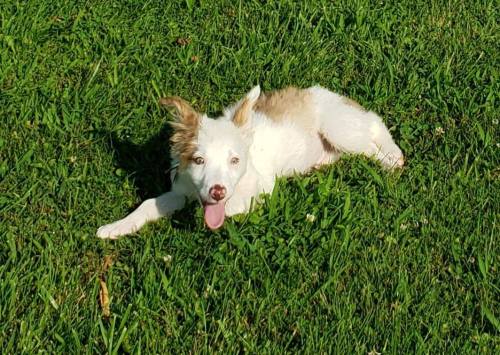
He bought the young Plott and named her Crockett, and he trained to hunt rac oons and gray foxes in the overgrown coverts that stretched out behind his house.
He was a school administrator by trade, but the demands of the job meant he could slip in and out when the cold nights of November came slipping down upon the hills.
He had run Walkers on red foxes as a boy, and he’d always had a beagle or two, but when his last beagle passed on to that Valhalla of cottontail chases, he went looking for a big hound to run.
When he saw the ad in the farm classified, he rushed off and plunked down the $250 for a little long-eared brindle pup and began the process of turning her into a first-rate varmint dog.
Crockett came from a long-line of hard driving bear dogs, but in these hills, the bears rarely graced the overgrown woods, and the law strictly forbade anyone from running bears with hounds.
So Crockett’s education was to run the raccoon and the gray fox until they took to the trees, where the man would come and blast them out of the trees with his .17 HMR.
Their fur would be sold at auction in the coming spring. It would sell for a pittance, but man and dog were united in their common cause, the cause of pursuit, the cause of the hunt.
She learned that tracking deer would make her neck burn with electricity, and she learned the same when she struck off after rabbits.
She learned that the gray fox scent and that of the raccoon were the great ones to follow, and like all proper trail hounds, she let loose the cries of the ecstasy of the pursuit while her nose breathed in the spoor and enlivened her very being.
One clear night in early December, Crockett was let loose from her dog yard, and she began casting her way through the coverts, casting her nose over the brush and briers and mud and rocks for the scent of the brier fox and the ring-tail.
She caught scent of a gray fox and began a baying run down its track. She was hot-blooded and alive, as only a scenthound can be when it’s on the trail of its quarry.
The fox heard her the banshee baying into the night and began his escape, running long hand hard down little ‘coon trails that course their way through heavy thickets of autumn olive. But the hound knew her trade, her passion, and she kept coming, screaming hard on the fox’s long tail.
So the fox changed his tactics and ran hard until he hit the big sycamore where he would sometimes spend long afternoons sleeping out out the day. Night was his time to prowl, and the tree was the perfect shelter until that sweet veil of darkness surrounded the land. It was along a remote little creek, where the thorny thickets drew in close, and no idle man would be willing to approach it, and any many with gumption would make enough noise on his approach to alert the fox’s ears and black quivering nose.
To get to the tree the fox began to double back on his track, trying to throw the hound’s questing run, and for a few minutes, he succeeded, and he used those few minutes to bolt fort the sycamore.
He raced up the tree as if he were a barn cat and not particularly canine. The gray fox is unique among North American canids in that it can climb trees, readily does so, especially when it wants to escape a predator.
The fox rested his form hard against a big branch and waited for the coming dog. Crockett hit the tree hard about five minutes later, and she began singing the song of a hound that has finally treed. The man would be there soon, the strap on his rifle would creak along with the cadence of his boots in the leaf litter. It would be the orchestra of death, the baying treed hound and the creaking rifle strap and the shuffling of boots, and then would come the loud boom. The fox would fall from the tree, and the hound would sent casting the woods once again.
But this time, another creature heard the whole song. It was a bitch coyote. 31 pounds of snapping, snarling fury, she had come to work the creek for any hidden vole or deer mouse trails, and now, she heard this other coyote screaming like it owned the place. It more than piqued her interest. It brought up her territorial spirit, and she came rushing down toward the sycamore, incensed at the interloper.
Crockett had never met the coyote before. She’d smelled her track a time or two, and she sometimes smelled coyote’s mate’s tracks a well, but they mostly stayed far from the gray fox and raccoon haunts, preferring to stay so far from man’s dwellings that they would never meet a dog.
The coyote came with jaws open in a gape threat, and the hound turned from the tree. She raised her tail and all her hackles. She let loose a few growling barks.
But the coyote tucked her tail between her legs and hackled up and began her intimidating circling of the dog. A tail between the legs and jaws wide open are the war stance of the coyote, and a dog with its tail up and crooked forward is making its war stance.
And so the two stared each other down beneath sycamore, but this would not be solved without a fight.
31 pounds of coyote and 52 pounds of Plott hound collided with each other in a fury of fangs and fur. The coyote was an experienced scrapper, and her long canines cut deep into the Plott ears.
But Crockett came from a line of bear dogs. In her blood, coursed the veins of the German forester’s hound remodified over the centuries in the Appalachians into the gritty bear hound. Rumors and lore persisted that the Plotts had a bit of wolf crossed into them, and if it were true, then it would just add a bit more grit and fighting spirit to the hound.
Two or three good bites from the coyote was all it took to release the fighting fury of the big game hound. Her greater mass and thick muscle were more than the coyote bitch had reckon for.
And soon the coyote was down. The Plott’s jaws were on her neck, pumping hard for the kill, and the coyote slipped into death beneath the sycamore.
The gray fox stared down at the hole scene. He didn’t move, for he had not expected such a thing to develop.
The man began calling for Crockett as he came down into the creekbed. He had heard the wild fighting the blackness of night, and he feared what might have happened to her.
Crockett ran to her master’s voice. He knelt to stroke her and talk the sweet lovings of a man greeting his dog. He was shocked to find the blood dripping from her right ear.
It was a big gash, and he wondered what could have done such a thing. Almost as if she read his mind, Crockett dashed off towards the sycamore. The man followed, casting his head lamp before him on its highest setting.
Its beams finally cast down into the thicket that led to the sycamore and then caught the Plott hound eye-shine. He plodded through the thorns to where he saw the dog standing, and then came upon her standing with her tail wagging.
The dead coyote bitch lay below her, and at first the man had no idea he was looking at. Had his dog killed a husky or a Norwegian elkhound. But one good look at narrow muzzle and long fangs told him otherwise. Crockett had killed a coyote.
He had never heard of a dog doing such a thing before, but his gritty little bear dog had done it.
He leashed Crockett and stroked her bloody ears. He told her what a good girl she was, and then he grabbed the coyote up by the hind legs with his other hand and began working his way back home.
He had bragging rights and a good dog, one that had taken out a wild bitch in the woods.
And as man and hound and quarry left the scene, the gray fox watched from his treetop vantage. He waited and waited until the hound and human feet no longer made a scratch on the leaves.
He shimmied down the tree, smelled the coyote and dog blood. All his hackles were raised at that hot scent, and his black tail hackle stripe rose up like a spiky flag.
If he could reason, he would have bet his life of that hard coyote bitch coming hard to fight the dog, but he’d spent much of his life keeping as far from their jaws as much as the hunter’s gun.
The night haunt of the gray fox was not ruined now, and after sniffing the blood for a bit, he slunk down the trail that he knew would lead him to a quiet lane of tram road where many cottontails sat out on cold December nights.
And so the hound and man left their mark of savagery upon the land. Organic beings made of nature, but now wholly contrived into the modern era of varmint and raccoon hunts. they were but reenactors of the old hunter-gatherer men and their wolfish dogs that went questing out for big game for survival. Two beasts of prey working in confederacy, man and what became dogs were the apex predators of yore.
But modern man has long since abandoned this life, but a few souls participate in the hunt of game and use their dogs and perhaps feel that old partnership rekindled in the darkness. Yes, it is ersatz, but it echoes pretty loudly in their psyches.
And it is the echoes that drive them and their hounds into the cold crisp darkness in search of game.
And so the hound will go into the brush in search of quarry and man will be following after.