Feeds:

Archive for November, 2009

Old-fashioned Irish setters, early Goldens, and some modern dogs

In addition to my post on the move to breed out the setter features in the show golden retriever in the 1930’s,  I’m going to show how easy it was to confuse goldens and setters.

Here are some old-fashion Irish red setters. The fact that the dog on the right has white marking does not make it an Irish red and white setter. The dog in the center has shorter ears and a slightly more substantial frame, but many of these dogs could pass for golden retrievers.

Of course, Irish setter were much more common that retrievers of that color, but these setters were often crossed with black flat-coats. The red to yellow color is recessive to the  black coloration, and it is very likely that black flat-coats that carried this recessive setter coloration were bred with retrievers derived from the Tweedmouth strain.

Breeding setters to flat-coats made the flat-coats faster and more agile. It also bred out the extremely wavy coats that existed within that breed (which is why they were called “wavy-coated retrievers.”) The goldens that would result as a byproduct of that improvement would look a lot like these Noranby dogs:

From my understanding, the Culham, Noranby, and Ingestre lines of golden were made up of a lot of lightly-built dogs that were of the dark color. I have seen a black and white photo of the first dual champion golden, Dual Ch. Balcombe Boy. This dog was a Culham dog, bred by Lewis Harcourt (1st Viscount Harcourt, the man who first coined the term “golden retriever.)  Balcombe Boy was of this type and very, very dark in color, what we would now call a mahogany (like this dog).

As noted in the earlier post, the field line dogs have tended to retain some of the setter’s features and coloration, as this dog clearly has.

Now, Irish setters have obviously moved in another direction, but in the working red setter registry, one can run across dogs that look like this dog.

The original Irish setter was red and white in color, and it has since been preserved (by a Presbyterian minister in Northern Ireland) in the breed called the Irish red and and white setter. This dog tends to have a broader skull than one sees in the red dog, and one also sees smaller ears and a somewhat heavier, more retriever-like frame.

If you look really carefully, one can see that Irish setters and golden retrievers do have a lot of features in common. Originally, they were very hard to tell apart.

Now, this is not to say that one can’t find photos and depictions of Tweedmouth strain goldens that are heavier in build. However, I can also find depictions of black wavy-coats that have that type of conformation. As the wavy-coat became the flat-coat, the really heavily build dogs were bred out of the bloodline, simply because they violated the “Power without lumber; raciness without weediness” axiom that made the flat-coat a superior working retriever. If one believes that we should breed for a heavier form in golden retrievers because one can find historical depictions of them, should we not also do the same with flat-coats?

I don’t think any flat-coat person would buy into it.

But in golden retrievers, this is a well-accepted virtue. In goldens this seems to be the main thought process:

Breed away from the setter and the flat-coat at all costs. Make the darker colors a fault within the breed, even though most of the early working gun dog talent in the breed were of these darker colors. The more the dogs resemble polar bears or Kodiak bears, the better.

But the lighter built dogs are more athletic and more efficient movers, so the working retriever people bred for this type.

 

Read Full Post »

Deer Season

In West Virginia, this is a week of great significance.

Although the rest of the country experiences the Thanksgiving holiday at the end of this week, rural West Virginia begins its yearly ritual on the Monday of this week.

Of course, I am talking about the beginning of the modern firearms season for antlered deer. This holiday has always eclipsed Thanksgiving. Because we always got the whole week off from school, most school children and nearly all adults from this part of the state call this break “Deer Season.”  Thanksgiving is an afterthought. Deer hunting is far more important.

In the halcyon days of the Northeast Ohio industrial economy, many people from West Virginia  wandered up “Route 21″ (now I-77) to the land of high wage union jobs. With that disposable income and good vacation times from their jobs, they would return home for Deer Season. I remember those years when the small rural county where I grew up would virtually double its population on the weekend before the first bucks could be legally shot.

In that one week, these urban workers got a chance to reconnect with their rural pasts, meet again with old friends, and shoot guns.

Many people would join hunt clubs that set up “primitive” hunting cabins, where the bullshit and booze tended to flow rather freely. Some people were always more interested in “beer hunting.” The song may have been The Second Week of Deer Camp, but for some sportsmen, it was more likely the Second Day or maybe the Second Hour.

Those days of large hunt clubs have mostly passed. The industrial economy has faded away.  The incomes that once sustained the deer camp ritual have gone. The deer are now so numerous that they can be shot off the front porch (albeit illegally).

But I’m sure that in those remaining deer camps, the traditions are still going strong. Maybe someone will actually get that Thirty Point Buck.  (I promise this will be the last cheesy deer hunting song! The deer in that video have far bigger antlers than any I’ve ever seen!)

***

Virtually every small business around here caters to deer hunters. I checked out the weekly paper, I saw a big full page ad with a list of all the official game checking stations, as well as the businesses that were offering deer hunter specials.

I laughed when I saw the two photos of cervids that were posted at the top of the ad.  Neither species could be shot in the county. In fact, they couldn’t even be shot illegally.

On the left hand side was a photo of three mule deer, one of which had its twisty, black-tipped tail raised. There have never been any mule deer in West Virginia. The other was that deer from the genus Cervus that we call elk. Those once ranged here, and they could potentially move up from Eastern Kentucky, where a healthy population of these animals now exists all the way up to the West Virginia border. Of course, we’re a long way from Kentucky, and I doubt those big deer are going to make their way up here any time soon.

Although you may have not been able to shoot an elk, you could eat an elk burger. That’s because on Saturday night, the local cafe had a big game special on which you could have an elk or bison burger with steak fries.

***

The internet daily news report for my county will have the opening day kill totals from the checking stations. I will update this post with a link to the report.

With a poor mast this year, it is likely that a lot of deer will be killed. The deer will be out in the open foraging, simply because there are not enough acorns and other nuts to feed them all.

For many locals, venison will be the main protein source for this winter. This will be particularly true with this bad economy.

***

As noted earlier, Deer Season tends to eclipse Thanksgiving.

On that day, the hunters typically go out in the morning, and then return home around noon. They then wash-up for dinner and settle in front of the TV for the Thanksgiving football games.

By the weekend, the guns start to draw silent. Only those truly die-hard hunters who have yet to kill their limit go into the woods.

Because Sunday hunting was voted down in a referendum, Deer Season week is usually done by Saturday evening. Buck season with modern firearms lasts another week,  but because it doesn’t coincide with a federal holiday, the number of hunters in the woods is but a mere fraction of what it was on opening day.

I hope that I haven’t bored you with this little account of a rural American custom that is slowly disappearing.  There are better states to hunt deer than West Virginia, and so we really don’t get the big trophy hunters coming here. And West Virginia’s population continues to get smaller, and the collapse of the Midwestern industrial economy means that large numbers of West Virginia transplants won’t be coming down the interstate to blast a few bucks.

The deer have no significant predators here other than people. Bears and coyotes might take the odd deer, but they do very little to reduce deer numbers. Even with the presence of coyotes, we now have more deer per square mile than we have ever had.

***

Having such large numbers of deer is a relatively recent phenomenon.

In the old days, those people who lived in the Allegheny Plateau and Ohio Valley regions of West Virginia had to travel into the High Alleghenies to find deer that they could legally shoot. This part of the state is associated with spruce forests and bogs. This area gives one the impression that one is in the Canada or Maine. Only the trademark dense thickets of Rhododendron that grow on the mountainsides give the location away.

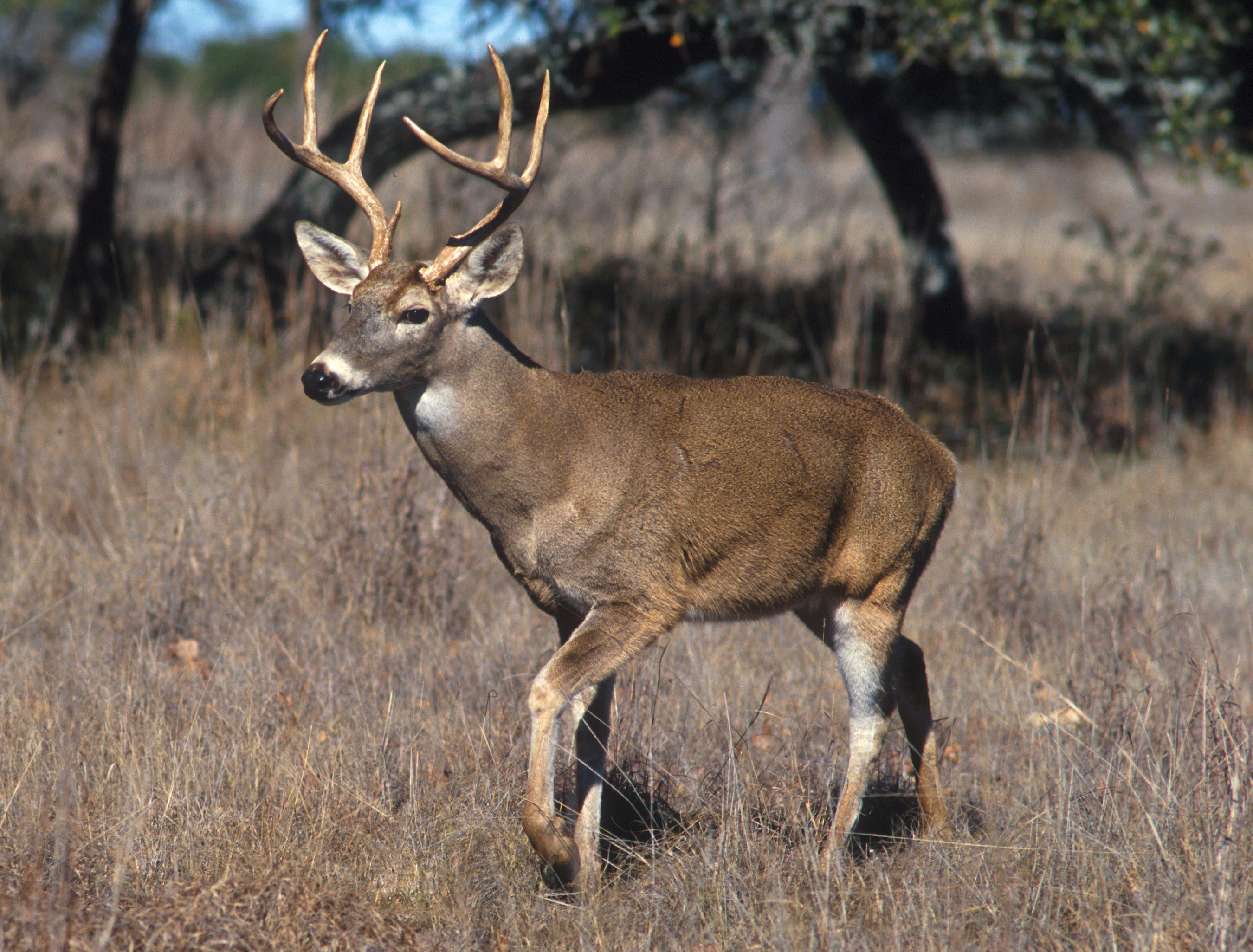
Centuries of unregulated hunting and then market hunting had reduced the population of white-tails significantly. The only parts of their range where they were able to survive was in the high mountains.  The Alleghenies had largest populations of white-tails in the East. It is partially from these deer that the other parts of the East were restocked with white-tails.

So if the deer are eating your flowers in parts of the the East or Midwest, you can partly blame West Virginia for your troubles.

***

Here’s a really good analysis of what deer season means to this part of West Virginia.

***

Update: Does can be taken during this this time, but most people are gunning for bucks. That’s why this year’s first day totals look like this.

Only one human fatality and one injury to report statewide.

Read Full Post »

Deer Season

In West Virginia, this is a week of great significance.

Although the rest of the country experiences the Thanksgiving holiday at the end of this week, rural West Virginia begins its yearly ritual on the Monday of this week.

Of course, I am talking about the beginning of the modern firearms season for antlered deer. This holiday has always eclipsed Thanksgiving. Because we always got the whole week off from school, most school children and nearly all adults from this part of the state call this break “Deer Season.”  Thanksgiving is an afterthought. Deer hunting is far more important.

In the halcyon days of the Northeast Ohio industrial economy, many people from West Virginia  wandered up “Route 21″ (now I-77) to the land of high wage union jobs. With that disposable income and good vacation times from their jobs, they would return home for Deer Season. I remember those years when the small rural county where I grew up would virtually double its population on the weekend before the first bucks could be legally shot.

In that one week, these urban workers got a chance to reconnect with their rural pasts, meet again with old friends, and shoot guns.

Many people would join hunt clubs that set up “primitive” hunting cabins, where the bullshit and booze tended to flow rather freely. Some people were always more interested in “beer hunting.” The song may have been The Second Week of Deer Camp, but for some sportsmen, it was more likely the Second Day or maybe the Second Hour.

Those days of large hunt clubs have mostly passed. The industrial economy has faded away.  The incomes that once sustained the deer camp ritual have gone. The deer are now so numerous that they can be shot off the front porch (albeit illegally).

But I’m sure that in those remaining deer camps, the traditions are still going strong. Maybe someone will actually get that Thirty Point Buck.  (I promise this will be the last cheesy deer hunting song! The deer in that video have far bigger antlers than any I’ve ever seen!)

***

Virtually every small business around here caters to deer hunters. I checked out the weekly paper, I saw a big full page ad with a list of all the official game checking stations, as well as the businesses that were offering deer hunter specials.

I laughed when I saw the two photos of cervids that were posted at the top of the ad.  Neither species could be shot in the county. In fact, they couldn’t even be shot illegally.

On the left hand side was a photo of three mule deer, one of which had its twisty, black-tipped tail raised. There have never been any mule deer in West Virginia. The other was that deer from the genus Cervus that we call elk. Those once ranged here, and they could potentially move up from Eastern Kentucky, where a healthy population of these animals now exists all the way up to the West Virginia border. Of course, we’re a long way from Kentucky, and I doubt those big deer are going to make their way up here any time soon.

Although you may have not been able to shoot an elk, you could eat an elk burger. That’s because on Saturday night, the local cafe had a big game special on which you could have an elk or bison burger with steak fries.

***

The internet daily news report for my county will have the opening day kill totals from the checking stations. I will update this post with a link to the report.

With a poor mast this year, it is likely that a lot of deer will be killed. The deer will be out in the open foraging, simply because there are not enough acorns and other nuts to feed them all.

For many locals, venison will be the main protein source for this winter. This will be particularly true with this bad economy.

***

As noted earlier, Deer Season tends to eclipse Thanksgiving.

On that day, the hunters typically go out in the morning, and then return home around noon. They then wash-up for dinner and settle in front of the TV for the Thanksgiving football games.

By the weekend, the guns start to draw silent. Only those truly die-hard hunters who have yet to kill their limit go into the woods.

Because Sunday hunting was voted down in a referendum, Deer Season week is usually done by Saturday evening. Buck season with modern firearms lasts another week,  but because it doesn’t coincide with a federal holiday, the number of hunters in the woods is but a mere fraction of what it was on opening day.

I hope that I haven’t bored you with this little account of a rural American custom that is slowly disappearing.  There are better states to hunt deer than West Virginia, and so we really don’t get the big trophy hunters coming here. And West Virginia’s population continues to get smaller, and the collapse of the Midwestern industrial economy means that large numbers of West Virginia transplants won’t be coming down the interstate to blast a few bucks.

The deer have no significant predators here other than people. Bears and coyotes might take the odd deer, but they do very little to reduce deer numbers. Even with the presence of coyotes, we now have more deer per square mile than we have ever had.

***

Having such large numbers of deer is a relatively recent phenomenon.

In the old days, those people who lived in the Allegheny Plateau and Ohio Valley regions of West Virginia had to travel into the High Alleghenies to find deer that they could legally shoot. This part of the state is associated with spruce forests and bogs. This area gives one the impression that one is in the Canada or Maine. Only the trademark dense thickets of Rhododendron that grow on the mountainsides give the location away.

Centuries of unregulated hunting and then market hunting had reduced the population of white-tails significantly. The only parts of their range where they were able to survive was in the high mountains.  The Alleghenies had largest populations of white-tails in the East. It is partially from these deer that the other parts of the East were restocked with white-tails.

So if the deer are eating your flowers in parts of the the East or Midwest, you can partly blame West Virginia for your troubles.

***

Here’s a really good analysis of what deer season means to this part of West Virginia.

***

Update: The first day totals from my home county. Does can be taken during this season, but far fewer of them are usually checked in.  Only one human fatality statewide– a heart attack  (more common than you’d think, because going up and down steep hillsides and then dragging 100-plus pound deer can stress the body a bit too much).

Another guy fell out of a tree stand but survived.

No ATV accidents or accidental shootings (which are quite a bit more rare, because most deer aren’t wearing hunter orange!)

Read Full Post »

Living with Wolves

Source.

I’ve always loved the documentaries about this pack.

I’ve also read the Dutchers’ book, which has pretty good insights into the intimate lives of wolves.

If you look at how their size and stature compares to the people in this film,  it is very obvious how different these big game hunting wolves from the northern parts of North America are from domestic dogs.

But they are also similar.


Read Full Post »

Living with Wolves

Source.

I’ve always loved the documentaries about this pack.

I’ve also read the Dutchers’ book, which has pretty good insights into the intimate lives of wolves.

If you look at how their size and stature compares to the people in this film,  it is very obvious how different these big game hunting wolves from the northern parts of North America are from domestic dogs.

But they are also similar.


Read Full Post »

A modest proposal for the University of Georgia

We all know that the people of Georgia celebrate their traditions and heritage as much as they love their football.

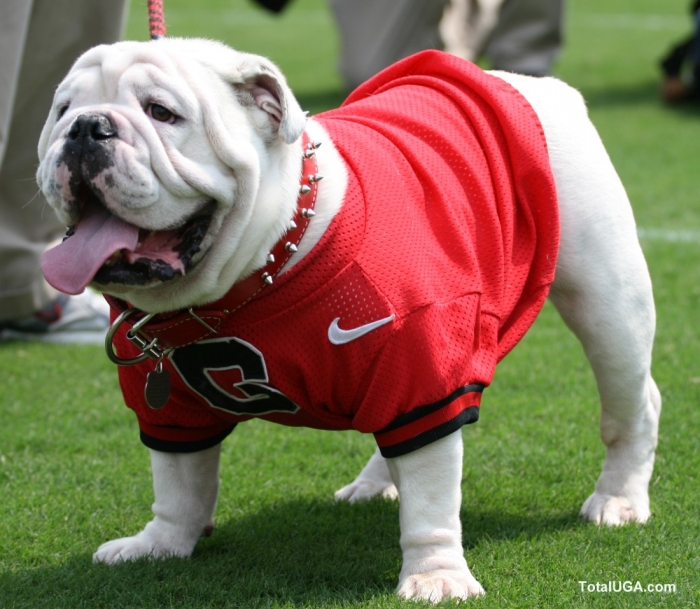
Among those traditions is Uga, the bulldog mascot of the University of Georgia. All of these dogs have been AKC-type “English” bulldogs, the ones that often appear in critiques of purebred dogs, usually because these dogs have a plethora of health conditions that typically come from their unique conformation.

All of these facts came to a head when Uga VII died Thursday morning at the age of 4. He unexpectedly died of a heart condition, and his owner said the dog wasn’t all that active compared to other bulldogs. Gina Spadafori at Pet Connection correctly suggests that lots of reforms have to be made to make a “less extreme” bulldog that can live a good long life (and also links to a post of mine that has a video of David Hancock’s analysis of historical bulldog conformation).

I think those reforms should be made, but I have another proposal.

The bulldog mascots are all what are called English bulldogs, as in they were developed solely in the United Kingdom.

However, Georgia already has a native bulldog, and it is also a less extreme version that looks a lot like the old-strain of bulldogs in the video.

In the American South, the bulldog was able to exist almost exactly as it did in England. The large plantations and wilderness farms required good catch dogs for moving and controlling livestock.

Virtually every part of the South had its own peculiar form of this dog. Today, these animals have been standardized into several breeds, including the relatively well-known American bulldog.

However, in the Alapaha region of South Georgia, a unique strain of the old-type bulldog has been preserved. The Lane family of Rebecca, Georgia, collected preserved this strain of bulldog, which they were afraid was becoming extinct.

The breed has since been called the Alapaha Blue Blood Bulldog, and it is very clearly an example of the old bulldog strain.

They are apparently healthier than the typical English bulldog, even though they are larger.  According to the various sites I’ve looked at, the life expectancy is 12-15 years.  According the best analysis of English bulldog longevity, the average lifespan for that breed is a little over 6 years.

Now, an Alapaha Blue Blood Bulldog is a larger animal than an English bulldog, and they do have a somewhat sharper edge that one can expect from these type of bulldogs.

But it would be a great statement if the University of Georgia would choose one of these dogs to be the next Uga.

Read Full Post »

Capuchin monkeys using oranges to control parasites

Source

White-headed capuchin monkeys (Cebus capucinus) do use citrus and other plants to control ectoparasites.

After all, citrus fruit can be used for flea control in domestic dogs and cats, so it makes since that a monkey would try it.

It may not be much of a shock to learn that capuchin monkeys are considered the most intelligent of the New Word primates. Some of these monkeys may have passed the famous mirror test for self awareness. It is very likely, then, that these monkeys have learned this behavior and have passed it along through the generations.

***

Now, you may know these monkeys a little better than most.

In the US, these animals accompanied organ grinders who trained the monkeys to perform on the street. Because of their association with the street performers, they were once called “organ grinder monkeys.”

Several monkeys make up the genus Cebus, and all are now call capuchins. They are so named for an order of friars called the Order of Friars Minor Capuchin. Members of this order wore brown hoods, which looked something like the brown “hooded” fur of these monkeys.

***

A famous white-headed capuchin of a more recent era was Marcel from the sitcom Friends.

Source

***

If you’re interested in videos like this, check out NatureBreak.org.

The videos are very well-done, and I particularly liked the videos that featured hellbenders and timber rattlesnakes, creatures that actually can be found in my part of the world (even though they look quite exotic.)

Read Full Post »

« Newer Posts - Older Posts »

Follow