Feeds:

Archive for July, 2010

The cat

Source for photo

As many of you correctly guessed,  this is a Pallas’s cat or manul.

These cats are native to a broad swathe of Central Asia, where they are at home in the harsh conditions of the mountains and high steppes. These cats are naturally occurring long-hairs and as far as I can tell, they are the only species of small wild cat with this type of coat.

Its flat forehead and rounded ears allows it peak over boulders without exposing itself to its prey. That is not a bad adaptation for hunting pikas in rocky terrain.

Pallas’s cat is now believed to the oldest living species of cat, but there is still some debate on whether it belongs in the genus Felis or in its own genus, which is traditionally called Otocolobus.

I prefer to call them Pallas’s cats instead of manuls.  I first encountered these cats at the Cincinnati Zoo, where they were displayed by that name.

Peter Simon Pallas, a German naturalist, first described the cats in 1776. Inviting to lecture in Russia at the behest of Catherine the Great, Pallas took extensive expeditions into the lands of the Russian Empire. It is in his study of Russian and Central Asian fauna that he came across this cat.

Many years ago, it was believed that all long-haired cats descended from crosses with Pallas’s cat. I remember reading that claim as late as the mid-90’s.

Yes, these cats do look a bit like Persians.

The fact that long-haired cats do have an origin in an area that is somewhat adjacent to Pallas’s cat’s range does appear to lead some credence to the theory.

But no one has found a hybrid between this animal and the domestic cat. No one has found Pallas’s cat genes in any domestic animal.

Maybe there are some, but I am very skeptical.

Read Full Post »

Storks in Romania

Catie took this photo of a white stork nest in Romania.

Many European visitors to this blog probably know this species well.  These birds do very well in urban environments. They simply build their big nests on power lines and roofs.

This is the legendary “stork” that brings babies to new parents.

I suppose this story makes sense to European children, but to North American children who live where there are no storks, this story was a bit hard to believe. If there are no storks around here, how did we come to be?

It sounded too much like a fairy tale to me.

Where I live, the closest thing to a stork is the turkey vulture. Turkey vultures, like all New World vultures, are actually more closely related to storks than they are to Old World vultures. Old World vultures are closely related to the raptors.

The New World vultures had a common ancestry with the storks. Although they do look very similar to the Old World vultures, they don’t have that much in common in terms of their most recent evolutionary history.

The similarities between these scavengers developed as a result of convergent evolution. Bald heads mean that  rotten offal is not left clinging to the feathers on one’s head, which increases the risk of infection. Sharp bills can tear open the toughest hides.

Despite the similarities, the turkey vulture counts the baby-delivering stork as a closer relative than any of the African vultures we have seen on so many nature shows.

Of course, being told that the turkey vulture or “buzzard” delivered you might be traumatic for a child.

So I think I’ll just leave this one alone.

***

I first learned of storks from these commercials:

Source.

While most people think of storks delivering babies, I think of them as having something to do with pickles.

I also thought Grouch Marx did a good impression of the Vlasic stork.

Read Full Post »

Read Full Post »

Willie is into tv

Willie watches television.

When the US switched to digital, television became accessible to dogs.

In the old analog broadcasts, the pictures moved too slowly for the dogs to perceive them as interesting. They actually saw television as series of still shots.

With the advent of digital television, the dogs can now see the images on the screen as moving objects.

Miley also loves television. She prefers cartoons.

Her favorites are Happy Feet and the Ice Age moives.

When those movies are on the television, her eyes get big. Her face develops a playful expression, and she occasional runs up to the TV, just to get a better look.

Read Full Post »

The partnership between emperor and saddleback tamarins

Source.

Tamarin monkeys have always fascinated me.  At the National Zoo, there is a rewilding project for golden lion tamarins.  Every summer, some of these monkeys are turned out into a wooded area, which allows them an opportunity to learn how to be wild. The National Zoo has reintroduced some of these monkeys to the coastal rainforests of Brazil.  The last time I was at the National Zoo, I saw two male golden lion tamarins fight over the privilege of carrying the family’s twins, which were smaller than chipmunks.

There are several species of lion tamarin, which I will explore in another post.

However, the partnership between emperor and saddleback tamarins is really quite fascinating. It is almost like a reversal of the tragedy of the commons.

Here we have a commons– the nectar in the flowers of these trees.

In order to use the resource properly, the two tamarin species have to treat the nectar as a commons. They cannot be possessive of it, or the trees will be tapped out.

So they must share the resource.

How such a partnership evolved is good question. I do not have the answer.

One wonders if these monkeys have the foresight to understand the consequences of not sharing the flowers.

It is possible that they do.

I am just trying to stay within Morgan’s Canon.

I still don’t have an answer.

***

Some of you might be wondering why the emperor tamarins are known by that name.

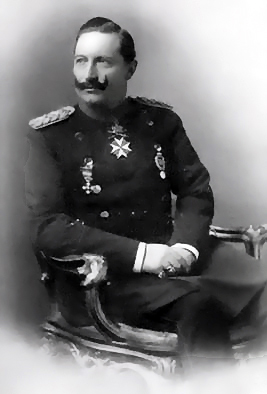
They are named for their mustaches, which somewhat resemble Kaiser Wilhelm II’s mustache.

Kaiser means emperor. It is derived from Caesar. If one uses the proper Latin pronunciation of Caesar, it actually sounds a lot like Kaiser.

The current convention in historiography is to call tsars/czars and kaisers emperors. The convention also holds that we change the name to its English equivalent.

I still can’t make myself do either.

Emperor William II.

Who in the heck was that?

Read Full Post »

Ground squirrels mob Cape cobra

Source.

Mobbing is a very common tactic that prey use against predators. It gives away the predator’s element of surprise, and most predators find it just a little annoying (to be anthropomorphic for a second).

Read Full Post »

Polydactyl puffin dogs have a “marital disagreement”

This is hilarious:

Source.

The dog has no interest in bitches. According to the youtube description, he was castrated long ago. Apparently, this happened before he became sexually mature, because he has no interest.

However, the bitch is willing and ready.

But he just wants to chew on his bone.

***

Yes. These are lundehund, the polydactyl puffin dogs from Norway.

In addition to being polydactyl, they are also quite flexible. (Another example. Do not try with “normal dogs,” you’ll break their necks.)

For lack of a better word, these dogs were used as puffin terriers. Atlantic puffins are auks that nest throughout the North Atlantic. I know of at least one colony that is found in the state of Maine.

The birds nest in burrows and rock clefts were they are inaccessible to most predators. The reason why the dogs are so flexible is so they can fit into a puffin’s den.

Puffins do not always nest in dens. They sometimes nest on rocky cliffs. It is often suggested that the extra toes on the lundehund gave it a better grip on the rock facings and allowed them better access to these puffin colonies.

They are every bit as fascinating as basenjis are. These dogs are truly unique, and are worth studying for their uniqueness alone.

***

As I noted earlier, the Norwegian lundehund has issues with a condition called lundehund gastroenteropathy. All lundehunds have genetics for the disease, but not all of them have symptoms.

They are also suffering from what I think is the most extreme genetic bottleneck in history of purebred dogs. There are roughly 2,000 of these dogs worldwide, but they are all derived from six individuals that survived a distemper outbreak that happened during World War II.

How these dogs have managed to survive such an extreme bottleneck is certainly a good question.

In fact, I have a few questions that I’d like to ask any knowledgeable lundehund person:

  1. The lundehunde are clearly unique dogs, but there are other breeds like them in Scandinavia and Iceland. Were any of these dogs used to increase  the genetic diversity in the breed?
  2. What percentage of the dogs suffer from lundehund gastroenteropathy that is so bad that the dogs cannot have a good life?
  3. Because puffins are protected throughout their range, are there any career change positions that have been considered for these puffin terriers?

I would like these questions answered. I’m not trying to pick on anyone here.

I just want to look at unusual dog breeds and the effects of extreme genetic bottlenecks on various species.

I’m just curious. Nothing more.

Read Full Post »

« Newer Posts - Older Posts »

Follow