Mr. Moneymaker probably doesn’t want to see this!
This is a very good introduction to thinking scientifically and skeptically.
Posted in cryptozoology, science, tagged bigfoot, Genie Scott, sasquatch on October 17, 2012 | 1 Comment »
Mr. Moneymaker probably doesn’t want to see this!
This is a very good introduction to thinking scientifically and skeptically.
Posted in Absolute Piffle, cryptozoology, tagged bigfoot, ohio bigfoot on August 23, 2012 | 4 Comments »
You don’t even need to think very hard to see that this is a person in a hoodie.
And the cameraman on the ATV has rather skillfully manipulated the camera just as the supposed bigfoot comes directly into view so that your eyes can’t discern that this is a person in a hoodie.
But I’m sure the crew from Finding Bigfoot will be convinced that it’s real.
I almost guarantee it.
Posted in birds, cryptozoology, wildlife, tagged ostriches, sea monsters on August 2, 2012 | 2 Comments »
A pair of archosaurs has been spotted swimming in Yzerfontein’s harbor! Yzerfontein is on South Africa’s Altantic Coast, just north of Cape Town.


Yeah. Ostriches can swim!
Posted in cryptozoology, wildlife, tagged dugongs, manatees, mermaids, Sirenia, Sirens on July 17, 2012 | 11 Comments »
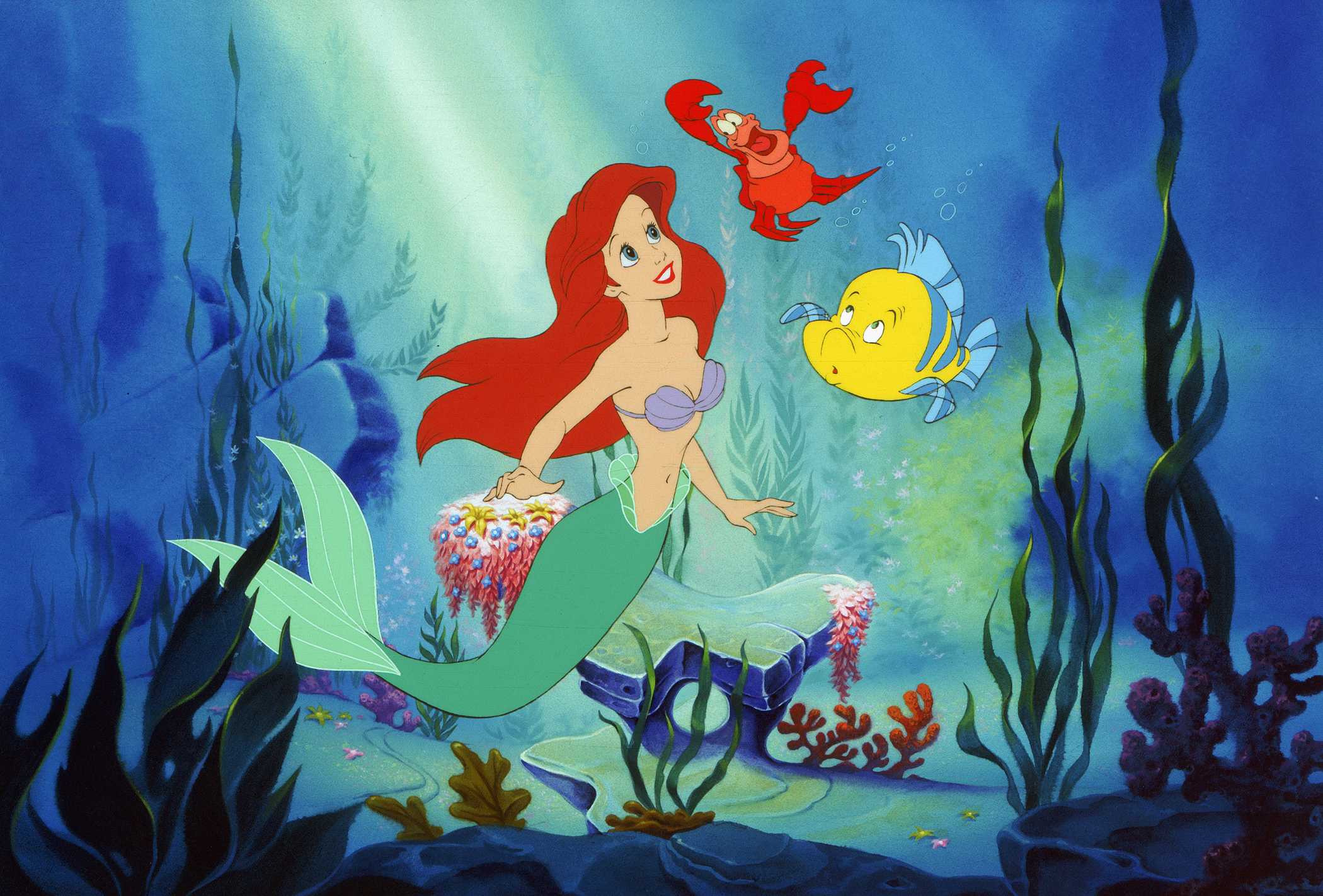
Unfortunately, mermaids like Ariel aren’t real.
But I still hold out hope for talking crabs with Jamaican accents.
Mermaids are real.
Yes.
You heard me right.
Now, before you call me a kook, give me a second to explain myself.
Mermaids that look like hot chicks with fish tails don’t exist.
I can say this with confidence.
Yes. I know about the Animal Planet mockumentary that fooled so many earlier this year. The film made the claim that the US government had discovered a mermaid body, and it posited that mermaids were a type of hominid or humanoid that evolved to live in the sea and have a close relationship with dolphins. It rehashed the much ballyhooed “aquatic ape hypothesis,” which is generally not well accepted by any anthropologists, paleontologists, or other experts in human evolution.
It was so well made that people actually believed that the US government had discovered mermaids– and (of course) was involved in some sort of cover-up.
Apparently, enough people had annoyed NOAA officials about the mermaid body that the agency was forced to issue an official statement in which it was clearly asserted that “[n]o evidence of aquatic humanoids has ever been found.” NOAA initially denied that the statement had nothing to do with the mockumentary, which came out in late May.
But when Animal Planet re-aired the film this weekend, NOAA instantly put out the same official statement.
So yes, a major agency of the US government was being influenced by a fantasy film.
Or rather, there are enough people who believed this mockumentary to elicit a response from the federal government.
So mermaids of the Hans Christian Andersen and Disney type don’t exist.
And the Animal Planet “aquatic ape” derivatives don’t either.
But mermaids do exist.
There have been many accounts of mermaids throughout history. Almost all of the claims for their existence come from either West Africa, the Indian Ocean, or the South Pacific– as well as the Caribbean, the Amazon Basin, and the Atlantic Coast of North America from North Carolina to Brazil.
Perhaps the first credible account of a mermaid comes from 1717. Two Dutch colonial officials wrote about the natural history of what is now Indonesia, and in the text, they mention a creature called the “See-wyf.” The authors describe a capture of one of these creatures and how it survived in a vat of water for over four days:
See-wyf. A monster resembling a Siren, caught near the island of Borne, or Boeren, [Borneo]in the Department of Amboine [Ambon Island]. It was 59 inches long, and in proportion as an eel. It lived on land, in a vat full of water, during four days, seven hours. From time to time it uttered little cries like those of a mouse. It would not eat, though it was offered small fish, shells, crabs, lobsters, &c. After its death, some excrement was discovered in the vat, like the secretion of a cat. The copy from which I have taken the representation for this work is thus coloured: hair, the hue of kelp; body, olive tint; webbed olive between the fingers, which have each four joints; the fringe round the waist orange, with a blue border; the fins green, face slate-grey; a delicate row of pink hairs runs the length of the tail [Source].
Much of this description seems to be pointing an animal very different from our conventional concept of a mermaid.
It’s not a beautiful animal that even remotely resembles a beautiful woman.
The mention of the animal being similar to a “siren” is some indication of its identity.
Sirens were the beautiful women whose song beguiled ships to their doom in Greek mythology, but the term is also used to refer to dugongs.
The text of this book was written in Dutch but then was published in French, so it is very likely that the French translators were unaware that siren could refer to this sort of animal. And the publishers had a creature like a mermaid depicted in the book, which makes things more confusing.
Nowhere in the text is there any mention of the creature looking like a woman with a fish’s tail.
This animal sounds like a baby dugong.
Referring to dugongs and manatees as sirens is an old tradition.
Westerners first encountered dugongs when they began exploring the Red Sea and Indian Ocean.
One of the weird features of a female dugong is that her genitalia resembles that of woman, and if you’re a randy sailor who has been sailing for month and months away from female company, this feature is going to be the one that gets the most attention. Men don’t often think with their brains.
And why these animals got called sirens or mermaids.

Dugongs are the real mermaids.
The see-wyf in the vat was very likely a baby dugong. Baby dugongs do make whistling cries when they are away from their mothers.
As a baby of that age, it would have only wanted to drink its mother’s milk, and it wouldn’t want to eat seafood at any age.
So it was not a good situation at all.
We’ve known about the identity of mermaids for a very long time.
They are quite real.
In the Indian and Pacific Oceans, as well as the Red Sea, the mermaids are dugongs.
In West Africa and the Americas, the mermaids are manatees.
They may not be as fanciful as “The Little Mermaid,” but these animals are pretty interesting in their own right.
Posted in cryptozoology, wild dogs, tagged chupacabras, coyote, Cuero chupacabras, Mexican wolf, Texas blue dogs, Texas chupacabras on June 11, 2012 | 10 Comments »

It never ceases to amaze me about how poorly informed people are about the natural world.
Whenever someone runs into a wild animal that is hairless for some reason, the imagination starts running wild. People start making claims that they’ve seen some sort of new species, perhaps an extraterrestrial or something from a secret government lab.
You often run into internet experts who swear that an animal can’t be merely a common animal with alopecia– “because it looks so different!”
Never mind that genetic studies clearly reveal the animal’s identity. It must be something unique!
Most northern hemisphere mammals are pretty well-furred.
From a distance, we don’t normally see the animal’s musculature or physique. We don’t see how its ears fit into the skull. We don’t see how the head is really shaped. The fur hides that much.
When the fur is gone, all of these features are revealed, and they do make the animal look more bizarre.
My personal favorite of all these amazing new animals is the chupacabra.
Pretty much every chupacabra ever killed or described to science has turned out to be either a dog or a coyote. In Puerto Rico, some might even be mongooses, which were introduced to control the rat population. On the US mainland, some chupacabras have turned out to be raccoons.
But the vast majority of these chupacabras have turned out to be canids. Some have been red foxes, but they most usually have been coyotes or domestic dogs.
And when the animal’s skin can be tested for disease, it almost always turns out that Sarcoptes scabei is the culprit. In short, these animals are hairless because of a severe case of sarcoptic mange.
The dead canid in the photo above is one two similarly afflicted individuals that were found in the vicinity of Cuero, Texas.
It was the second one to have its DNA analyzed. The first was found dead on a ranch in the vicinity of the town. DNA tests revealed that it was a coyote.
The second one was shot in roughly the same area, and it turned out to be a bit different. It had coyote mtDNA, but its y-chromosome was that of a Mexican wolf (Canis lupus baileyi). Y-chromosome tests merely trace paternal heritage, so it is very possible somewhere along the way, a Mexican wolf mated with a coyote somewhere in that region. The offspring then bred back into coyotes, and through each generation, the wolf component of their ancestry became diluted. But the Mexican wolf y-chromosome remained, even though these animals are coyotes.
Now, that finding is much, much more interesting than all the crap that has been written about these particular chupacabras from Cuero. The woman who collected these samples runs a website that is full of denialism about what these animals actually are. I am particularly enjoying her claim that the tracks of these animals don’t look like those of coyotes, even though the track pictured looks exactly like the coyote track I photographed two years ago.
To me, it’s a much more amazing find to discover that Mexican wolves have contributed a few genes to the Texas coyote population.
It’s a much more amazing discovery than anything people can imagine about these animals being a unique species, which some have suggested should be called a “Texas blue dog.” (I thought that was a political term!)
This animal is yet another example of the wondrous species complex that exists between Canis lupus and Canis latrans.
Trying to turn these animals into unique species really isn’t that different from what people have tried to do with the red wolf and the so-called Eastern wolf species. Both have ancestry from both wolves and coyotes, but that does not make them unique species at all.
If the case for the Eastern wolf and red wolf as distinct species is that terrible, the case for the Texas blue dog is even worse off. Its blue eye and so-called “pouches” aren’t going to make any difference.
Coyotes can have blue eyes.
This one, I believe, was killed in New Mexico, where the coyotes are either free or almost entirely free of dog ancestry:

They actually can get bluer than this one. Coyotes may have a mutation that causes blue eyes that is entirely different from what causes blue eyes in domestic dogs. No one has performed any analysis to determine why coyotes, even those from populations that have not been known to cross with dogs, like the ones in the Southwest, sometimes have blue eyes.
As for the pouches, those are actually cysts called hygromas that develop when an animal spends so much time sitting on its haunches scratching its neck. Which is exactly what we’d expect from an animal suffering from a severe case of sarcoptic mange.
Of course, Texas isn’t a place where knowledge about zoology should be expected. This is, after all, the state that attempted to introduce creationist textbooks into the class room.
I’m not saying everyone in Texas is an idiot, but any state that would elect this guy governor has a large number of citizens who have issues with critical thinking.
The discovery of a coyote with a Mexican wolf y-chromosome is an amazing discovery. If we’ve found one coyote with this ancestry, there are likely many of them.
There are lots of questions to ask about these coyotes. When did the y-chromosome enter the population? How widespread are coyotes with this ancestry? These questions are very much worth asking.
After all, the Mexican wolf is the most critically endangered subspecies of wolf in North America, and although its former range included Texas, the exact limits of its historical range are not clear. There is some evidence that it occurred as far north as Colorado, and its range in Texas may have been more extensive than we currently estimate.
But we can’t ask that question when we’re trying to turn these animals into paranormal bloodsuckers.
I know that chupacabras get the headlines.
But we’ve actually found something quite interesting here.
The truth is actually much more amazing than anything our imaginations could contrive.
Posted in cryptozoology, tagged alien big cat, Beast of Cullen, Eurasian otter, otter on June 11, 2012 | 14 Comments »

From STV:
Builder John Robertson, 50, stumbled across the rotting carcass on a path in Cullen, Moray, while out with his wife, Pauline, and their two dogs on Monday morning.
On a nearby cliff-top lay the mangled remains of half a dozen seagulls which appear to have been the beast’s last meal before it plunged to its death below.
“I couldn’t believe my eyes,” he said. “I have never seen so many dead birds in one area.
“They were completely mauled, they had their guts totally ripped out of them lying on the ground.
“Then a little further on we came across a horrible rotting smell which was this big cat. It looks like it’s feasted on the seagulls and maybe it has fallen down the cliff nearby, injured itself and just lay there till it died.”
John’s eye was caught by the frightening sharp teeth and 18 inch-long tail, but he said the most terrifying thing of all was that it may have been a cub.
“I didn’t have a tape measurer on me to measure the tail, but I’m a builder so I have a pretty good idea that it’s about 18 inches long.
“I reckon it’s a cub though, its teeth are too clean and there isn’t enough damage to them, which means they must be pretty new. You can imagine how big it’s mother would be.
“I’m sure we’ll find out from the DNA tests what type of cat it is, but it certainly seems like one of the big cats.”
I hate to burst anyone’s bubble.
But it’s not any kind of cat.
It’s a Eurasian otter.
You can see the extensive webbing between the toes hasn’t rotted away, and the head clearly has the wedge shape of a Eurasian otter. The tail is also long and flat and possesses a pointed tip.
None of these traits are indicative of a big cat.
It’s an otter.
Otters are making a comeback in the United Kingdom, and Scotland is one of their strongholds.
Confusing this animal with any kind of cat shows that the knowledge about the natural world is quite limited among the public.
This isn’t even a particularly decomposed carcass. One can still see that it has definite otter characteristics.
But no, it must be a big cat.
It’s good for headlines, and it’s good for getting attention.
But I don’t think it helps the discourse at all.
Misidentifying decomposed carcasses is a major problem in the modern internet-driven world.
At least they didn’t contrive this animal into something so bizarrely impossible that it would have to be the result of extraterrestrials or some nefarious government cover up.
You know, like the Montauk monster.
Posted in Absolute Piffle, conservationist, cryptozoology, tagged Florida sea monster, Gene Sowerwine on April 18, 2012 | 3 Comments »
It’s definitely a mosasaur!
This guy’s footage shows it to be in the same location as a mystery creature, which I agree is a manatee.
Manatees are known to live in the same areas as American crocodiles and American alligators. I am betting that it is most likely an American crocodile, just judging from the head shape.
Not only is this person abusing Occam’s razor severely by suggesting that the thing that looks like a crocodilian is a mososaur, he’s a creatard, too!
“Evolutionists say it went extinct!”
That really helps your credibility!
Kent Hovind wouldn’t even try to pull something like this.
It’s obviously a crocodilian. It’s of not a mystery animal, and anyone can see that!
No wonder MonsterQuest didn’t cover it.
It would have been the shortest episode in history.
« Newer Posts - Older Posts »


 | M.R.S. on The morel of the story… |
 | Will and Eko on It’s spring time in West… |
 | Labrador Retriever I… on Merritt Clifton: German Shephe… |
 | Myra on Merritt Clifton: German Shephe… |
| M.R.S. on Merritt Clifton: German Shephe… |